Ray Parker's Posts (53)

Sort by

Technology is growing faster every year. Businesses now depend heavily on websites, mobile apps, cloud platforms, and digital systems to serve customers. Because of this, software quality has become more important than ever before. Even a small software bug can lead to poor customer experiences, financial losses, or security problems.

Traditional manual testing is no longer enough for modern software development. Companies release updates quickly, sometimes every day, and testing everything manually takes too much time and effort. This is why many businesses are now investing in AI-driven test automation.

Artificial intelligence is changing the way software testing works. AI-powered testing tools can identify bugs faster, reduce repetitive work, and improve software quality. As a result, companies across different industries are adopting smarter testing technologies to stay competitive.

This article explains why businesses are investing in AI-driven test automation, how it works, its benefits, challenges, and why many organizations partner with professional test automation companies to improve their software testing processes.

What Is AI-Driven Test Automation?

AI-driven test automation uses artificial intelligence and machine learning to improve software testing. Instead of relying only on traditional scripts, AI-powered tools can learn from testing data, recognize patterns, and make testing smarter over time.

These tools help automate many testing tasks such as:

  • Detecting software bugs
  • Creating test cases
  • Running repetitive tests
  • Predicting risky areas in software
  • Identifying visual issues
  • Maintaining test scripts automatically

AI allows testing systems to become faster, more adaptive, and more accurate than traditional testing methods.

Why Traditional Testing Is Becoming Difficult

Modern software applications are much more complex than older systems. Today’s apps must work across:

  • Different browsers
  • Mobile devices
  • Operating systems
  • Cloud environments
  • APIs and integrations

At the same time, companies release software updates very frequently. Manual testing cannot keep up with this speed.

Traditional testing also faces several problems:

  • High testing costs
  • Slow execution
  • Human errors
  • Large maintenance effort
  • Difficulty scaling tests

Businesses now need smarter solutions that can test software quickly without reducing quality.

Faster Software Releases

One major reason companies invest in AI-driven testing is speed.

Modern businesses follow Agile and DevOps development methods, where software updates happen continuously. Companies want to release new features quickly to stay ahead of competitors.

AI-powered automation tools help teams:

  • Run tests faster
  • Detect bugs early
  • Reduce delays
  • Improve release cycles

Instead of spending days testing manually, AI systems can complete large testing tasks in minutes.

This allows businesses to launch products and updates much more quickly.

Improved Software Quality

Software quality directly affects customer satisfaction. If users experience crashes, slow performance, or broken features, they may stop using the product.

AI-driven testing improves quality by identifying issues more accurately.

AI tools can:

  • Detect hidden bugs
  • Analyze application behavior
  • Monitor performance problems
  • Identify risky code changes

Because AI systems process large amounts of testing data, they can often find problems humans may miss.

This leads to more reliable software and better user experiences.

Reduced Human Errors

Manual testing can become repetitive and tiring. Human testers may accidentally skip steps or overlook defects.

AI automation reduces these risks by performing tests consistently every time.

Benefits include:

  • More accurate results
  • Fewer missed bugs
  • Better test coverage
  • Consistent execution

This improves confidence in software releases.

Self-Healing Test Scripts

One common problem in traditional automation testing is script maintenance.

When developers update website layouts or application interfaces, old test scripts may stop working. QA teams then spend large amounts of time fixing scripts manually.

AI-powered testing tools now offer self-healing capabilities.

These systems can automatically adjust test scripts when small application changes occur. This reduces maintenance work and keeps automation running smoothly.

Many test automation companies now use self-healing frameworks to improve testing efficiency.

Better Test Coverage

Modern applications contain thousands of features and workflows. Testing everything manually is nearly impossible.

AI helps increase test coverage by:

  • Generating additional test cases
  • Exploring different user scenarios
  • Running parallel tests
  • Identifying risky areas automatically

This allows companies to test more parts of their software within less time.

Better test coverage means fewer software failures after release.

Cost Savings for Businesses

Although AI-driven testing tools may require initial investment, they often reduce long-term costs significantly.

AI automation reduces:

  • Manual testing effort
  • Time spent fixing bugs
  • Delayed product launches
  • Maintenance costs
  • Production failures

Businesses can also reduce the need for very large manual testing teams.

This is one reason why many organizations now work with specialized test automation companies that provide advanced AI-powered testing services.

AI and Continuous Testing

Continuous testing is an important part of DevOps and Agile development.

In continuous testing, software is tested throughout the development process instead of only at the end.

AI improves continuous testing by:

  • Running automated tests instantly
  • Prioritizing high-risk tests
  • Analyzing failures quickly
  • Providing faster feedback

This helps development teams fix problems earlier before they become more expensive.

Visual Testing With AI

Modern websites and applications must look correct across all browsers and devices.

AI-powered visual testing tools compare screenshots automatically and detect issues such as:

  • Broken layouts
  • Missing buttons
  • Incorrect fonts
  • Misaligned elements

Visual testing saves QA teams huge amounts of time compared to manual visual inspections.

AI in Predictive Analytics

AI testing tools can study historical testing data and predict which areas of software are most likely to fail.

This helps teams focus on high-risk areas first.

Predictive analytics improves:

  • Risk management
  • Testing efficiency
  • Resource allocation
  • Bug prevention

This smarter approach helps companies reduce software failures.

Growing Demand for Test Automation Companies

As AI-driven testing becomes more advanced, many businesses prefer outsourcing testing services to experienced providers.

Professional test automation companies offer:

  • Skilled QA engineers
  • AI-powered frameworks
  • Cloud testing environments
  • Cross-browser testing
  • Continuous integration support

Outsourcing allows businesses to access advanced testing technologies without building large internal QA teams.

This trend continues growing worldwide as digital systems become more complex.

Challenges of AI-Driven Test Automation

Although AI testing offers many benefits, there are still challenges.

High Initial Investment

Advanced AI testing tools may require significant setup costs.

Learning Curve

Teams need proper training to use AI-powered tools effectively.

Data Quality Issues

AI systems depend on good testing data to make accurate decisions.

Complex Integration

Integrating AI testing into existing workflows can sometimes be difficult.

Despite these challenges, the long-term advantages often outweigh the initial difficulties.

The Future of AI in Test Automation

The future of software testing will likely depend heavily on artificial intelligence.

Future AI testing technologies may include:

  • Fully autonomous testing systems
  • Smarter predictive analytics
  • Real-time bug prevention
  • Advanced self-healing automation
  • AI-generated testing strategies

As AI continues improving, software testing may become faster, smarter, and more reliable than ever before.

Businesses that adopt AI-driven testing early may gain strong competitive advantages.

Conclusion

Companies are investing heavily in AI-driven test automation because modern software development requires faster releases, better quality, and more efficient testing processes.

AI-powered tools help businesses reduce manual work, detect bugs faster, improve software reliability, and lower long-term costs. Features such as self-healing scripts, predictive analytics, and visual testing are transforming the QA industry.

As digital applications become more advanced, many businesses now rely on experienced test automation companies to manage testing efficiently and support continuous software delivery.

The future of software testing will continue evolving with artificial intelligence at the center. Companies that embrace AI-driven automation today will be better prepared for tomorrow’s digital challenges.

FAQs

What is AI-driven test automation?

AI-driven test automation uses artificial intelligence and machine learning to improve software testing processes and automate testing tasks.

Why are companies investing in AI testing?

Companies invest in AI testing to improve software quality, reduce costs, speed up releases, and increase testing efficiency.

What are self-healing test scripts?

Self-healing scripts automatically adjust when small application changes occur, reducing manual maintenance work.

How does AI improve software quality?

AI helps detect bugs faster, improve test coverage, and identify software risks more accurately.

Why do businesses hire test automation companies?

Businesses hire test automation companies to access skilled QA experts, advanced tools, and scalable automation solutions.
Read more…

Cybersecurity teams are under pressure from every direction. Hybrid workforces, third-party vendors, cloud applications, remote infrastructure, and increasingly sophisticated threat actors have completely changed how organizations think about access control.

The old model of simply protecting the network perimeter is no longer enough. Modern enterprises now need granular visibility into who can access what, when they can access it, and how those permissions are monitored over time.

That’s why secure access control platforms have become a foundational part of modern cybersecurity strategy.

Whether you're managing privileged accounts, enforcing zero-trust architecture, or securing remote access across distributed environments, the right platform can significantly reduce risk while improving operational efficiency.

Top 7 Access Control Platforms 

If your organization is evaluating vendors, this guide can also help you better choose the right platform based on your security requirements, compliance needs, and infrastructure complexity.

Below are seven of the best secure access control platforms organizations should evaluate in 2026.

1. Acre Security

Acre Security has emerged as one of the strongest players in enterprise-grade access control by combining physical security, cloud-based infrastructure, and scalable identity management into a unified ecosystem.

What makes Acre particularly compelling is its ability to bridge traditional physical access systems with modern cybersecurity expectations. Many enterprises still operate fragmented access environments where building access, identity management, and security monitoring exist in separate silos. Acre helps consolidate these systems into a more centralized framework.

Its platform supports:

  • Cloud-native access management

  • Mobile credentials

  • Multi-site enterprise deployments

  • Real-time monitoring and analytics

  • Role-based access permissions

  • Remote management capabilities

For organizations operating hybrid environments or globally distributed offices, centralized administration becomes critical. Acre’s emphasis on scalability and operational simplicity makes it attractive for enterprises that need modernized access control without excessive infrastructure complexity.

Another key advantage is flexibility. Enterprises can integrate Acre into broader security ecosystems while maintaining compliance and visibility across facilities and users. Learn more at acresecurity.com.

As more organizations move toward unified security operations, solutions like Acre are increasingly relevant because they reduce operational friction between IT, cybersecurity, and physical security teams.

2. Okta

Okta remains one of the most recognized names in identity and access management (IAM), especially for cloud-first organizations.

Its platform focuses heavily on authentication, identity governance, and secure user lifecycle management. Companies adopting SaaS-heavy environments often turn to Okta because of its extensive integrations and relatively streamlined deployment process.

Some of Okta’s core capabilities include:

  • Single sign-on (SSO)

  • Adaptive multi-factor authentication (MFA)

  • Identity governance

  • API access management

  • Zero-trust enforcement

  • Automated provisioning and deprovisioning

One reason Okta continues to dominate the IAM conversation is its broad compatibility with enterprise applications and cloud services. Security teams can centralize authentication policies while reducing password-related vulnerabilities.

Okta is especially valuable for organizations trying to reduce identity sprawl and enforce consistent authentication standards across distributed teams.

That said, enterprises with highly customized infrastructure may require additional integration work depending on complexity and scale.

3. CyberArk

When discussing privileged access management (PAM), CyberArk is almost always part of the conversation.

Privileged accounts remain one of the most targeted attack vectors in cybersecurity. Administrators, service accounts, and elevated credentials provide attackers with massive opportunities once compromised.

CyberArk specializes in securing these high-risk accounts through advanced privileged access controls and credential management systems.

Its platform offers:

  • Privileged session monitoring

  • Credential vaulting

  • Least privilege enforcement

  • Threat analytics

  • Endpoint privilege management

  • Secrets management for DevOps environments

CyberArk is often favored by large enterprises operating in highly regulated industries such as finance, healthcare, and government.

One of its biggest strengths is visibility into privileged activity. Organizations can closely monitor sessions, reduce standing privileges, and better contain lateral movement risks.

As ransomware attacks continue evolving, privileged access management has become a central pillar of enterprise defense strategies, making CyberArk an important vendor to evaluate.

4. Microsoft Extra ID

Previously known as Azure Active Directory, Microsoft Entra ID has become deeply integrated into enterprise identity and access management ecosystems.

For organizations already invested in Microsoft infrastructure, Entra ID offers a compelling access control solution because of its native integration with Microsoft 365, Azure services, and Windows environments.

Key capabilities include:

  • Conditional access policies

  • Identity protection

  • Multi-factor authentication

  • Risk-based authentication

  • Single sign-on

  • Device compliance integration

One of Entra ID’s strongest advantages is operational convenience. Many organizations already rely heavily on Microsoft tools, making deployment and policy management more centralized.

Its conditional access framework also supports zero-trust initiatives by evaluating user risk, device health, and contextual signals before granting access.

For mid-sized and enterprise organizations seeking consolidated identity management, Entra ID often becomes a natural extension of existing Microsoft ecosystems.

However, organizations with highly heterogeneous environments may still require supplemental tools for more advanced PAM or third-party integrations.

5. JumpCloud

JumpCloud has gained substantial traction among small-to-mid-sized businesses and modern IT teams looking for cloud-native directory services and device management.

Unlike legacy directory systems that rely heavily on on-premise infrastructure, JumpCloud was built with remote work and decentralized environments in mind.

Its platform combines:

  • Identity management

  • Device management

  • Single sign-on

  • Multi-factor authentication

  • LDAP and RADIUS services

  • Cross-platform endpoint support

One of JumpCloud’s biggest strengths is simplicity. Organizations can manage Windows, macOS, and Linux devices from a centralized cloud-based interface without maintaining traditional Active Directory infrastructure.

For startups and growing businesses that prioritize agility, JumpCloud offers a more lightweight approach to access management compared to some enterprise-heavy alternatives.

Its flexibility also appeals to organizations operating fully remote or globally distributed teams where traditional network assumptions no longer apply.

6. BeyondTrust

BeyondTrust focuses heavily on privileged access security and remote support solutions.

As remote administration and third-party vendor access become increasingly common, organizations need stronger visibility into privileged sessions and external access pathways.

BeyondTrust addresses this challenge through:

  • Privileged remote access

  • Endpoint privilege management

  • Secure remote support

  • Password vaulting

  • Session auditing

  • Threat detection capabilities

One of the platform’s standout strengths is balancing security with usability. Many organizations struggle with implementing strict privileged access controls without disrupting workflows for IT teams and administrators.

BeyondTrust attempts to reduce that friction while still enforcing stronger governance and auditing standards.

The platform is particularly useful for organizations managing large numbers of contractors, vendors, or distributed support teams that require elevated access into sensitive environments.

Its detailed session logging and auditing features also help organizations improve compliance reporting and incident investigations.

7. Ping Identity

Ping Identity has become a major player in enterprise authentication and federated identity management.

Large organizations operating across multiple applications, cloud providers, and business units often face identity fragmentation challenges. Ping Identity helps unify authentication workflows while supporting complex enterprise architectures.

Its offerings include:

  • Federated identity management

  • Adaptive authentication

  • Customer identity access management (CIAM)

  • API security

  • Single sign-on

  • Zero-trust security controls

Ping Identity is particularly strong in hybrid enterprise environments where organizations need to support both legacy systems and modern cloud applications simultaneously.

Its adaptive authentication capabilities also help organizations dynamically evaluate risk signals before granting access.

As cyber threats increasingly target identity systems themselves, adaptive and context-aware authentication is becoming more important than static credential-based models.

Ping Identity’s flexibility and enterprise scalability make it a strong contender for organizations with sophisticated identity requirements.

What to Look for in a Secure Access Control Platform?

Choosing an access control solution is no longer just about authentication.

Modern enterprises need platforms capable of supporting broader cybersecurity initiatives including zero trust, compliance management, remote workforce security, and privileged access governance.

When evaluating platforms, organizations should consider:

Scalability

Can the platform support future growth across users, offices, devices, and applications without major infrastructure overhauls?

Integration Capabilities

The best platforms integrate cleanly with existing identity providers, cloud infrastructure, SIEM tools, endpoint protection systems, and compliance frameworks.

Zero-Trust Support

Modern security strategies increasingly rely on zero-trust principles that continuously validate users, devices, and contextual risk signals.

Visibility and Auditing

Detailed logging, monitoring, and session auditing are essential for both security operations and regulatory compliance.

Ease of Administration

Security tools that are overly complex often create operational bottlenecks. Centralized management and automation can significantly reduce administrative overhead.

Hybrid and Remote Workforce Support

Remote work is now permanent for many organizations. Platforms must securely support distributed users, contractors, and third-party vendors without sacrificing visibility or control.

Final Thoughts

Secure access control is no longer a niche IT function. It sits at the center of modern cybersecurity strategy.

As organizations continue expanding across cloud environments, remote workforces, SaaS platforms, and connected infrastructure, identity and access management challenges will only grow more complex.

The strongest platforms in 2026 are those that combine scalability, visibility, automation, and zero-trust principles into unified security ecosystems.

Whether your organization prioritizes privileged access management, identity governance, physical access control, or cloud-native authentication, the vendors above represent some of the strongest options currently available.

The key is selecting a platform that aligns with your infrastructure, compliance obligations, operational maturity, and long-term security strategy.


Read more…

Introduction

Health supplements have become extremely popular in recent years because people are paying more attention to their physical and mental well-being. In 2026, one product that is gaining significant attention online is the Fudholyvaz health supplement. Many users are discussing its possible health benefits, ingredients, and how it may support a healthier lifestyle.

People today want supplements that are simple to use, made with quality ingredients, and capable of supporting everyday wellness goals. This growing interest is one reason why many consumers are searching online to learn more about the product and especially asking questions like “what's in fudholyvaz” before deciding whether to try it.

This article explains why the Fudholyvaz health supplement is becoming popular in 2026, its possible benefits, ingredients, usage, and what people should know before using any wellness supplement.

What Is Fudholyvaz Health Supplement?

Fudholyvaz is a wellness supplement designed to support overall health and daily performance. Like many modern health products, it is promoted as a supplement that may help improve energy, focus, body balance, and general wellness.

The supplement is attracting attention because many consumers are looking for natural support products that fit easily into their daily routines. As interest in health awareness continues to rise, supplements like Fudholyvaz are becoming more visible on social media, wellness blogs, and online discussions.

Many users researching the product first search for “what's in fudholyvaz” because understanding ingredients has become very important for modern consumers.

Why Health Supplements Are Trending in 2026

The health industry has changed dramatically over the past few years. People are now more focused on prevention rather than waiting for health problems to appear.

Several reasons explain why supplements are growing rapidly:

  • Busy modern lifestyles
  • Increased stress levels
  • Poor eating habits
  • Lack of exercise
  • Growing interest in fitness
  • More health awareness online

Many people now use supplements to support their nutrition and wellness goals. This trend has helped products like Fudholyvaz gain popularity in 2026.

Why Fudholyvaz Is Getting So Much Attention

1. Growing Interest in Wellness Products

Consumers are becoming more interested in products that may support healthy living naturally. Fudholyvaz is gaining attention because people want supplements that may improve their energy levels and daily wellness routines.

Health-conscious consumers now spend more time researching products before buying them. This is why searches related to “what's in fudholyvaz” are becoming more common online.

2. Social Media Discussions

Social media platforms play a major role in product popularity today. Many wellness influencers, fitness creators, and health bloggers discuss supplements and share their experiences online.

This online exposure increases public curiosity and encourages more people to learn about trending health products.

Videos, reviews, and user experiences help products gain visibility much faster than traditional advertising.

3. Interest in Ingredient Transparency

Modern consumers care about ingredient quality more than ever before. They want to understand exactly what they are putting into their bodies.

People often search for ingredient information before purchasing any supplement. Questions about “what's in fudholyvaz” show that users want transparency and safety when choosing health products.

Companies that clearly explain their ingredients usually gain more customer trust.

Common Ingredients Found in Wellness Supplements

Although product formulas can vary, many modern wellness supplements commonly include ingredients such as:

  • Vitamins
  • Minerals
  • Herbal extracts
  • Antioxidants
  • Natural plant compounds
  • Amino acids

These ingredients are often used to support:

  • Energy production
  • Mental focus
  • Immune system health
  • Muscle recovery
  • General wellness

Consumers should always review labels carefully and consult healthcare professionals before starting any new supplement.

Potential Benefits of Fudholyvaz Health Supplement

Improved Daily Energy

One reason people are interested in supplements is the desire for better daily energy levels. Busy work schedules and modern lifestyles often leave people feeling tired.

Some wellness supplements may help support natural energy production and reduce feelings of fatigue.

Better Focus and Mental Clarity

Mental performance is important for students, workers, and professionals. Many people look for supplements that may support concentration and focus during busy days.

Products that claim cognitive support are becoming more popular in 2026.

Support for Active Lifestyles

Fitness and wellness trends continue to grow globally. People who exercise regularly often use supplements to support recovery and overall health.

Health supplements may help individuals maintain balanced nutrition while supporting active lifestyles.

Convenient Wellness Support

Many people struggle to maintain perfectly balanced diets every day. Supplements offer a simple and convenient way to support nutritional needs.

This convenience makes wellness supplements attractive for busy individuals.

Importance of Research Before Using Supplements

Although supplements are popular, users should always research products carefully before use.

Important steps include:

  • Reading ingredient labels
  • Checking customer reviews
  • Understanding possible side effects
  • Consulting healthcare professionals
  • Following dosage instructions

Consumers should avoid relying only on online trends or advertisements when making health decisions.

The Role of AI and Technology in Supplement Marketing

Technology is changing how health products are promoted and researched.

AI tools now help companies:

  • Analyze consumer trends
  • Improve personalized recommendations
  • Create targeted wellness programs
  • Monitor customer feedback

At the same time, consumers use search engines and AI assistants to ask detailed questions like “what's in fudholyvaz” to better understand products before buying them.

This combination of technology and wellness marketing is shaping the future of the supplement industry.

Challenges in the Supplement Industry

Despite growing popularity, the supplement market also faces challenges.

Misinformation

Not all online health information is accurate. Some advertisements make unrealistic claims that may confuse consumers.

Product Quality Differences

Not all supplements are manufactured with the same quality standards. This is why researching trusted brands is important.

Safety Concerns

Some ingredients may not be suitable for everyone. Individuals with health conditions or those taking medications should always speak with healthcare professionals before using supplements.

How Consumers Choose Supplements in 2026

Modern buyers are smarter and more careful than before.

Consumers now look for:

  • Transparent ingredient lists
  • Scientific research
  • Positive customer reviews
  • Trusted manufacturing practices
  • Natural ingredients
  • Clear health information

This shift is forcing supplement companies to become more open and informative about their products.

Future of the Wellness Supplement Industry

The supplement industry is expected to continue growing rapidly in the coming years.

Future trends may include:

  • Personalized supplements
  • AI-powered wellness recommendations
  • Natural ingredient formulas
  • Sustainable packaging
  • Smart health tracking integration

As health awareness increases worldwide, more people will continue exploring wellness products that support their daily lifestyles.

Tips Before Trying Any Supplement

Before using any supplement, consider these tips:

Read the Label Carefully

Always understand the ingredients and recommended dosage.

Consult a Healthcare Professional

People with medical conditions should seek professional advice before using supplements.

Follow Recommended Usage

Taking more than the recommended amount may not improve results and could create risks.

Combine Supplements With Healthy Habits

Supplements work best alongside:

  • Healthy eating
  • Exercise
  • Proper sleep
  • Stress management

Conclusion

The growing popularity of the Fudholyvaz health supplement in 2026 reflects the increasing public interest in wellness, nutrition, and healthier lifestyles. Modern consumers want products that may support energy, focus, and daily wellness while fitting easily into busy routines.

Many people searching online for “what's in fudholyvaz” show how important ingredient transparency and product knowledge have become in today’s health industry. Consumers are now more informed and cautious when selecting wellness products.

While supplements may offer support for certain wellness goals, it is important to research products carefully, understand ingredients, and follow professional medical advice when necessary. As the wellness industry continues to evolve, products like Fudholyvaz are likely to remain part of the growing conversation around health and modern nutrition.

Read more…

Most businesses don’t lose customers because of one big mistake.

They lose them because of small, barely noticeable issues that build up over time.

A slow reply here. A confusing step there. A moment where the customer has to stop and think, “What do I do next?”

Individually, these things don’t seem like a big deal. But together, they create friction. And friction is often the difference between someone choosing you—or quietly walking away. Many organisations only start addressing this once they take a structured approach, often through frameworks similar to Probe CX's cx transformation services.

What “Friction” Actually Means

Friction is anything that makes an experience feel harder than it should be.

It doesn’t have to be dramatic. In fact, the most damaging friction points are usually subtle.

Common examples include:

  • Waiting too long for a response
  • Not knowing what happens next
  • Having to repeat information
  • Dealing with unclear instructions

These moments interrupt the flow. And once that flow is broken, customers start to lose patience.

Why Small Problems Have a Big Impact

Customers don’t usually complain about friction. They just leave.

That’s what makes it so easy to overlook.

Here’s how it plays out:

  • A customer encounters a small issue
  • They tolerate it… at first
  • Another issue appears
  • Frustration builds quietly
  • They choose a simpler alternative next time

By the time you notice a drop-off, the damage is already done.

The Most Common Friction Points Businesses Miss

If you want to improve your customer experience, these are the areas worth paying attention to first.

1. Slow or Unclear Communication

Speed matters, but clarity matters just as much.

Customers don’t just want a reply—they want a useful reply.

Where this goes wrong:

  • Generic responses that don’t answer the question
  • Delays without explanation
  • Vague next steps

What works better:

  • Acknowledge enquiries quickly
  • Be specific and direct
  • Tell the customer exactly what happens next

Clear communication removes uncertainty.

2. Too Many Steps to Get Started

If it takes too long to take action, people hesitate.

Whether it’s booking, signing up, or making a purchase, unnecessary steps create resistance.

Common issues:

  • Long forms with too many fields
  • Multiple pages to complete a simple action
  • Processes that feel repetitive

How to simplify:

  • Remove anything that isn’t essential
  • Combine steps where possible
  • Make the next action obvious

The easier it is to begin, the more people will follow through.

3. Inconsistent Experiences

Inconsistency creates doubt.

If one interaction feels smooth and the next feels disorganised, customers start to question reliability.

Signs of inconsistency:

  • Different answers from different team members
  • Unpredictable response times
  • Changing processes without explanation

A better approach:

  • Standardise key processes
  • Align your team on how things are handled
  • Keep the experience predictable

Consistency builds confidence.

4. Lack of Follow-Up

Many businesses focus on the first interaction but forget what happens after.

That’s where opportunities are often lost.

What happens without follow-up:

  • Customers forget or lose interest
  • Questions go unanswered
  • Momentum disappears

What to do instead:

  • Check in after the initial contact
  • Offer help without being pushy
  • Keep the conversation moving forward

Follow-up shows reliability and attention to detail.

5. Making Customers Work Too Hard

Any time a customer has to put in extra effort, it creates friction.

This includes:

  • Searching for basic information
  • Re-entering details they’ve already provided
  • Navigating confusing systems

How to reduce effort:

  • Make information easy to find
  • Store and reuse customer data where appropriate
  • Keep systems simple and intuitive

Effortless experiences feel faster—even if they’re not.

Why Businesses Often Overlook These Issues

Friction is easy to miss from the inside.

When you’re familiar with your own processes, they feel normal. You know where to click, what to expect, and how things work.

Customers don’t.

The gap comes from:

  • Internal familiarity vs external experience
  • Assumptions about what’s “obvious”
  • Processes designed for convenience, not clarity

Closing that gap requires seeing things from the outside.

A Simple Way to Spot Friction in Your Business

You don’t need complex tools to start improving.

Just walk through your own process as if you were a customer.

Ask yourself:

  • How easy is it to get started?
  • Is every step clear without explanation?
  • Where would I feel confused or frustrated?
  • How long would I wait before giving up?

Even one honest walkthrough can reveal issues you hadn’t noticed.

Small Fixes Create Noticeable Improvements

The goal isn’t perfection. It’s progress.

You don’t need to redesign everything at once. Focus on removing friction in key areas:

  • First contact
  • Core actions (booking, buying, enquiring)
  • Follow-up and communication

Improving just these moments can dramatically change how your business feels to customers.

Why Effortless Always Wins

When given a choice, people choose what feels easier.

Not necessarily what’s cheaper or even better—just easier.

That’s why reducing friction is so powerful. It doesn’t require a completely different product or service. It simply makes what you already offer more accessible.

And when everything feels smooth, natural, and easy to navigate, customers don’t just stay—they come back.

Because once something feels effortless, it becomes the obvious choice.

Read more…

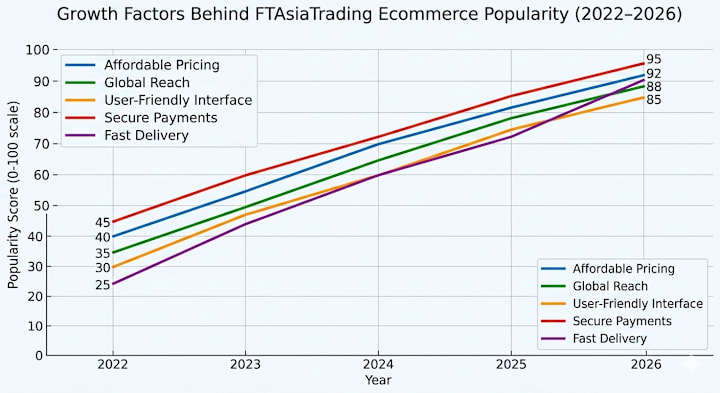
In recent years, online shopping has grown faster than ever before. More people now prefer to buy and sell products online instead of visiting physical stores. In 2026, one name that is getting a lot of attention in this space is FTAsiaTrading eCommerce. Many business and individuals are turning toward this platform because of its flexibility, user-friendly features, and growing market reach.

This article explains why FTAsiaTrading eCommerce is becoming popular and how it is helping both beginners and experienced sellers succeed in the digital world.

The Rise of Ecommerce in 2026

Before understanding the success of FTAsiaTrading eCommerce, it is important to look at the bigger picture. Ecommerce has changed the way people shop. With smartphones, fast internet, and secure payment systems, customers can now order anything from anywhere.

Businesses are also shifting online because it reduces costs and increases reach. Instead of running a physical store, they can manage everything digitally. This is where platforms like FTAsiaTrading eCommerce come into play, offering tools and support for smooth online operations.

What Is FTAsiaTrading eCommerce?

FTAsiaTrading eCommerce is an online platform that allows businesses to sell products and services digitally. It connects sellers with buyers across different regions, making it easier to expand into new markets.

The platform is designed for all types of users. Whether you are a small business owner, a startup, or an established company, you can use FTAsiaTrading eCommerce to grow your brand.

Easy Setup for Beginners

One of the main reasons behind the popularity of FTAsiaTrading eCommerce is its simple setup process. Many people hesitate to start online businesses because they think it is too complicated.

However, this platform makes things easier by providing step-by-step guidance. You do not need advanced technical skills to get started. From creating a store to listing products, everything is designed in a way that even beginners can understand.

This ease of use encourages more people to try eCommerce, which is why the platform is growing quickly.

Wide Market Reach

Another important reason for its popularity is its ability to connect sellers with a large audience. FTAsiaTrading eCommerce helps businesses reach customers not only locally but also internationally.

This is especially useful for small businesses that want to expand beyond their local market. With the help of the platform, they can showcase their products to a global audience without spending too much money on marketing.

Affordable and Cost-Effective

Starting a traditional business often requires a large investment. Rent, staff, and maintenance costs can be very high. In contrast, FTAsiaTrading eCommerce offers a more affordable solution.

Sellers can set up their online store with minimal costs. This allows them to focus more on product quality and customer service. Lower costs also mean higher profit margins, which attracts more users to the platform.

Secure Payment and Transactions

Security is a major concern in online shopping. Customers want to be sure that their payments are safe, and sellers want to receive their money without issues.

FTAsiaTrading eCommerce provides secure payment options that build trust between buyers and sellers. Safe transactions encourage more people to use the platform regularly.

User-Friendly Interface

A platform’s design plays a big role in its success. If a website is difficult to use, people will leave quickly. FTAsiaTrading eCommerce focuses on providing a clean and simple interface.

Customers can easily browse products, add items to their cart, and complete purchases. Sellers can manage orders, track inventory, and communicate with customers without confusion.

This smooth experience is one of the key reasons why users keep coming back.

Helpful Tools for Sellers

FTAsiaTrading eCommerce offers various tools that help sellers grow their business. These tools include product management, order tracking, and customer communication features.

In addition, the platform provides useful insights that help sellers understand customer behavior. This information allows them to improve their strategies and increase sales.

Many sellers also rely on FTAsiaTrading eCommerce tips to learn how to optimize their listings, attract more customers, and improve their overall performance.

Support for Small Businesses

Small businesses often struggle to compete with large companies. FTAsiaTrading eCommerce gives them a fair chance by providing equal opportunities to reach customers.

With the right approach and proper use of FTAsiaTrading eCommerce tips, small sellers can build a strong online presence and grow their business steadily.

This support for small businesses is one of the reasons why the platform is gaining attention in 2026.

Growing Demand for Online Shopping

Customer behavior has changed significantly in recent years. People now prefer convenience, and online shopping offers exactly that.

FTAsiaTrading eCommerce meets this demand by providing a reliable platform where customers can find a wide range of products in one place. Fast delivery options and easy returns also make the shopping experience better.

As more people move toward online shopping, platforms like FTAsiaTrading eCommerce continue to grow.

Strong Customer Engagement

Building a relationship with customers is important for long-term success. FTAsiaTrading eCommerce allows sellers to interact with buyers through messages, reviews, and feedback.

This communication helps sellers understand customer needs and improve their services. Positive reviews also attract new customers, creating a cycle of growth.

Using FTAsiaTrading eCommerce tips, sellers can learn how to engage customers effectively and build trust over time.

Future Growth Potential

 
Delete

The future of eCommerce looks very promising. Technology is improving, and more people are getting access to the internet. This creates new opportunities for online platforms.

FTAsiaTrading eCommerce is expected to grow even more in the coming years. With continuous updates and new features, it aims to provide better services to both buyers and sellers.

Businesses that start using the platform now can benefit from its future growth.

Conclusion

FTAsiaTrading eCommerce is gaining popularity in 2026 for many good reasons. It is easy to use, affordable, and offers a wide market reach. It also provides helpful tools and secure transactions, making it a reliable choice for online businesses.

For beginners and small business owners, the platform opens new doors to success. By following the right strategies and applying FTAsiaTrading eCommerce tips, sellers can improve their performance and grow steadily.

As eCommerce continues to expand, platforms like FTAsiaTrading eCommerce will play an important role in shaping the future of online business.

FAQs

1. What is FTAsiaTrading eCommerce?

It is an online platform where businesses can sell products and services to customers across different regions.

2. Why is FTAsiaTrading eCommerce popular in 2026?

It is popular because it is easy to use, cost-effective, and helps sellers reach a wide audience.

3. Can beginners use FTAsiaTrading eCommerce?

Yes, the platform is designed for beginners and provides simple tools to start an online store.

4. How can sellers improve their performance?

Sellers can follow FTAsiaTrading eCommerce tips, improve product listings, and focus on customer satisfaction.

5. Is FTAsiaTrading eCommerce safe to use?

Yes, it offers secure payment options and protects both buyers and sellers during transactions.

Read more…

Software testing is often described as the backbone of quality assurance. Without proper testing, even well-built software may fail in real-world use. Among the many activities in testing, writing test cases stands out as one of the most important tasks. Yet, the quality of these test cases can vary widely. Some are clear and easy to follow, while others may confuse testers and reduce efficiency.

In this context, test cases in software testing are not simply documents. They can be understood as structured representations of expected system behavior. When written clearly, they guide testers, reduce errors, and improve communication within the team. However, when written poorly, they may lead to misunderstandings and missed defects.

This article explores how to write clear and simple test cases in a way that is easy to understand, even for beginners.

Understanding Test Cases

A test case is a set of steps used to check whether a software feature works correctly. It usually includes inputs, actions, and expected results. At first glance, this may seem straightforward. Still, writing an effective test case requires careful thinking.

Some scholars in software engineering suggest that test cases should act as both verification tools and communication tools. This means they should not only test the system but also explain clearly what is being tested and why.

For example, a simple login test case might include entering a username and password, clicking the login button, and checking whether access is granted. While this appears basic, the clarity of instructions can make a significant difference in execution.

Why Clarity Matters in Test Case Writing

Clarity is essential because test cases are often used by multiple people. A test case written by one tester may be executed by another. If the instructions are unclear, the results may not be reliable.

It could be argued that unclear test cases introduce risk into the testing process. Testers might interpret steps differently, which can lead to inconsistent results. In contrast, clear test cases create consistency and improve the overall quality of testing.

Moreover, simple language helps reduce confusion. While technical terms are sometimes necessary, overusing complex language can make test cases difficult to understand, especially for beginners.

Key Elements of a Good Test Case

A well-written test case usually includes several important parts. Each part serves a specific purpose and contributes to clarity.

A test case ID helps identify the test case easily. The title or description explains what is being tested. Preconditions describe any setup needed before execution. Test steps provide clear instructions, while expected results show what should happen after each step.

Some experts also recommend including postconditions, which describe the system state after the test is completed. Although not always required, they can add extra clarity in complex scenarios.

Principles for Writing Clear Test Cases

Writing clear test cases involves more than just following a template. It requires attention to language, structure, and purpose.

One important principle is to use simple and direct language. Sentences should be easy to read and avoid unnecessary complexity. For instance, instead of writing long and complicated instructions, shorter sentences can make the steps easier to follow.

Another principle involves consistency. Terms used in one test case should be used in the same way in others. If a button is called “Submit” in one test case, it should not be referred to as “Send” in another.

It is also helpful to write test steps in a logical order. Each step should follow naturally from the previous one. This makes execution smoother and reduces the chance of errors.

Writing Step-by-Step Instructions

The steps in a test case should be detailed enough to guide the tester but not so detailed that they become overwhelming. Finding this balance can be challenging.

For example, consider testing a login feature. A clear set of steps might include opening the application, entering valid credentials, and clicking the login button. Each step is simple and easy to follow.

At the same time, it may not be necessary to describe very basic actions, such as how to use a keyboard, unless the target audience requires it. This reflects an important tension in test case design between completeness and simplicity.

Use of Expected Results

Expected results are a critical part of any test case. They define what success looks like. Without them, it becomes difficult to judge whether a test has passed or failed.

Clear expected results should be specific and measurable. For instance, instead of saying “the system should work properly,” it is better to state that “the user should be redirected to the dashboard page.”

In some cases, multiple expected results may be needed for a single test case. Each step can have its own expected outcome, which improves accuracy.

Common Mistakes in Test Case Writing

Despite best efforts, testers often make mistakes when writing test cases. Recognizing these mistakes can help improve quality.

One common issue is writing vague instructions. Statements like “check the system” do not provide enough detail. Another problem is including too many steps in a single test case, which can make it difficult to execute and maintain.

Overuse of technical language can also create barriers. While some level of technical detail is necessary, excessive jargon may confuse less experienced testers.

Additionally, failing to update test cases when the software changes can lead to outdated and ineffective tests.

Balancing Detail and Simplicity

There is an ongoing debate in the field about how detailed test cases should be. Some professionals prefer highly detailed test cases to ensure accuracy, while others argue for simpler test cases to improve speed and flexibility.

A balanced approach may be the most effective. Test cases should include enough detail to avoid confusion but remain simple enough to be practical. The level of detail may depend on factors such as team experience, project complexity, and testing goals.

Role of Test Cases in Team Collaboration

Test cases are not only tools for testing but also tools for communication. They help developers, testers, and managers understand what is being tested and why.

Clear test cases can improve collaboration by providing a shared understanding of requirements. When everyone interprets test cases in the same way, the chances of miscommunication are reduced.

In this sense, Test Cases in Software Testing can be seen as part of a larger system of knowledge sharing within a team.

Improving Test Case Quality Over Time

Writing good test cases is a skill that improves with practice. Regular review and feedback can help testers refine their approach.

Peer reviews are often useful. Another tester may notice unclear steps or missing details that the original writer overlooked. Over time, this process can lead to more consistent and effective test cases.

It may also be helpful to use real examples and learn from past projects. Experience plays a significant role in improving test case design.

Practical Tips for Beginners

For beginners, it is important to start with simple test cases. Focus on basic features and write clear, step-by-step instructions.

Reading existing test cases can also provide useful insights. Observing how experienced testers write their test cases may help beginners develop their own style.

It is equally important to practice regularly. Writing test cases for different scenarios can build confidence and improve understanding.

Conclusion

Writing clear and simple test cases is an essential skill in software testing. While the concept may seem straightforward, it involves careful thought and attention to detail. Clarity, simplicity, and consistency are key factors that contribute to effective test cases.

By understanding the structure and purpose of test cases, testers can improve their ability to detect defects and ensure software quality. Although no single approach fits all situations, a balanced method that considers both detail and simplicity often works best.

In the broader context, Test Cases in Software Testing serve as both testing tools and communication tools. When written well, they support better collaboration and lead to more reliable software.

Frequently Asked Questions (FAQs)

What are test cases in software testing?

Test cases are sets of steps and conditions used to check whether a software feature works as expected.

Why is clarity important in test cases?

Clarity helps testers understand and execute test cases correctly, reducing errors and improving consistency.

What should a good test case include?

A good test case includes an ID, description, steps, inputs, expected results, and sometimes preconditions and postconditions.

How can beginners improve test case writing?

Beginners can practice writing simple test cases, study examples, and seek feedback from experienced testers.

Are detailed test cases always better?

Not always. Test cases should be detailed enough to avoid confusion but simple enough to remain practical and easy to use.

Read more…

Users need to take complete responsibility for securing their funds because cryptocurrency allows them to achieve financial independence. Unlike in traditional baking, cryptocurrency transactions become permanent after they are transferred from the wallet. 

The combination of these factors makes hackers, phishing attackers, and fraudulent platform operators view investors as ideal targets. Good security practices can reduce their risk and enable them to avoid costly missteps. These five key tips can assist in protecting your cryptocurrencies against hacking attempts as well as fraud.

1. Use Reputable and Secure Wallets

A solid wallet is the basis of cryptocurrency security. While software wallets are easy for daily use, hardware wallets provide greater security for long-term storage. Hardware wallets keep private keys offline, therefore preventing threats from obtaining hold of them.

Opt for wallets created by reliable businesses and maintain current wallet software. Users need to understand that they should not download wallet applications from websites that they do not trust or from sources that are not official. A fake wallet can steal private keys and transfer funds without warning. 

2. Choose Reputable Crypto Exchanges

A reliable exchange platform like Kraken plays a crucial role in safeguarding your funds during the process of purchasing and selling cryptocurrencies. As you consider Kraken for buying Litecoin, for instance, ensure you check its security features.

Established platforms protect their resources through investment in security systems, user account surveillance, and systems that prevent unauthorized access to user accounts. The exchanges establish verification systems that enhance security while they deliver customer service support. A reputable exchange reduces the risk of fraud and provides a smoother experience.

3. Enable Two Factor Authentication on All Accounts

Two-factor authentication adds protection that extends beyond the security that passwords provide. When someone obtains your password, they need to obtain a second verification code before they can access your account. Authentication applications, which many exchanges and cryptocurrency platforms support, generate time-sensitive security codes for user authentication.

Use authentication apps as your verification method instead of using SMS. Criminals exploit SMS verification systems through SIM swap attacks that enable them to take control of someone else's phone number. The use of authenticator applications decreases this security risk while it delivers enhanced account protection for both exchange platforms and wallet systems.

4. Avoiding Phishing Links and Suspicious Messages

Phishing scams remain one of the most common ways crypto investors lose funds. Attackers create phishing websites and send phishing emails that appear to be real crypto platforms. The messages request recipients to share their login information, along with their wallet access details and their private keys.

Users should confirm website URLs before entering their crypto account information. You can bookmark the official exchange website since those links will provide safer access than clicking links that you find in email or social media content.

5. Keep Software and Devices Secure

The security of cryptocurrency transactions relies on the protection of devices that people use to reach their digital wallets and exchange accounts. Malware, keyloggers, and compromised applications will expose users' passwords and private keys to detection by unauthorized parties. The establishment of a secure device environment leads to substantial risk reduction for companies.

Updates to software have to be installed as they include essential security patches that shield against weaknesses. Users should set up robust antivirus software, and they should avoid bringing any unconfirmed applications into the space where they manage cryptocurrencies.

Endnote

The achievement of crypto asset protection requires users to practice disciplined security procedures, which they must apply consistently. Scammers usually target beginners who fail to follow essential safety rules. The combination of secure wallet usage, authentication setup, phishing attacks prevention, and choosing trustworthy exchanges and device safety will create a substantial decrease in digital asset loss risk for investors. 

Read more…

In the contemporary online environment, businesses usually spend money on the same type of cybersecurity devices a firewall, endpoint protection, intrusion detectors, and AI-based monitoring systems. But even though almost the same setups are used the results are simply different in different businesses. There are companies which are smoothly covered and resistant and there are companies that still suffer attacks, weaknesses and operational interferences. This discrepancy brings up a significant issue, namely, why does the same security arrangement appear so different in businesses?

The solution is not the tools, but the way of their implementation, management, and integration in each specific environment.

The Organizational Infrastructure role

Each business works on the basis of another IT infrastructure. Two companies may buy the same cybersecurity package, yet the inner system cloud-based setup, the old software, the network structure, and the hardware may be quite different. Such differences have direct effects on the performance of the security tools.

As an illustration, an enterprise with old systems can not fully incorporate the current security measures and leave loopholes which can be exploited by hackers. Conversely, when a business has its properly optimized, modern infrastructure, it is able to use the same tools to its advantage and will have more robust protection and smooth sailing.

Human Factors and Expertise

There is no cyberspace security which is not human-related. The proficiency of IT staff is also an important factor in the definition of the effectiveness of security systems implementation and maintenance. Experienced specialists are aware of the way to set the tools, track threats, and address the incidents in advance.

Alternatively, organizations that have little knowledge in cyberspace security might use default settings or neglect to upgrade their systems on a regular basis. It can result in an underperformance, even with the high-level tools. Similar to any machine, security solutions need constant care and professionalism to be operating to their efficiency.

Individualization and Adaptation

There is no single threat that can affect the two businesses. The risk profile of a company is affected by industry, size, location and customer base among others. Consequently, cybersecurity is required to be tailored to fulfill particular needs.

A retail company, e.g., can give priority to the security of payments and data security of their customers whereas a healthcare organization can afford to ensure that it protects sensitive patient information. Although they may be using the same security platform, their settings will be different- resulting in different results.

This is a concept that may be likened to the variation of design aspects in other industries. Similarly, to the ways, in which the same materials can be used to generate various visual effects, depending on the setting, security tools also vary according to their location. Indicatively, in a totally different setting, the same materials used in building could look different with the condition of lighting, constructions and positioning-just as the services of vinyl siding services Sussex could offer different outputs in different houses.

Integration with Existing Systems

The other critical consideration is the extent of integration between security tools with the available technologies. Companies tend to combine several software packages CRM systems, cloud computing, and communication technologies, etc. Unless cybersecurity systems are effectively integrated, they can work in silos and therefore diminish their effectiveness.

Close integration would facilitate greater visibility, quicker identification of threats, and responses. Such poor integration, however, may result into blind spots, delays and inefficiency which would make the same tools seem less effective.

Security Awareness and Culture of the Company

The role of a culture of a company in the outcomes of cybersecurity is surprisingly big. Organizations that were more security awareness such as training programs, policies, and frequent updates were more likely to excel.

The employees tend to be at the front lines of defense. Even the most sophisticated security systems may be broken by phishing attacks, ineffective passwords, and unsecure browsing. Companies investing in employee training are able to establish a stronger environment, whereas companies that do not train their employees might find it difficult to have good technical defenses in place.

Budget and Resource Allocation

Two businesses can buy identical core tools, but the amount of resources that goes to the maintenance and optimization of the tools may vary. Larger entities can have teams of security, more sophisticated analytics, and 24-7 monitoring. Smaller businesses, however, might not have time or resources to do continued management.

This difference influences the performance of security installations in the long run. Even the most effective tools are useless without maintenance, updates and monitoring.

Differences in Threat Landscape and Industry

Some businesses are not equally risky. Cyberattacks are common in industries that deal with sensitive information like the finances, healthcare and e-commerce. A firm in a context that represents a high-risk can be faced with more problems, despite having a strong security configuration.

Also, trading policy and geographic factors may be used to affect security policies. The local legislation and industry practices also require businesses to modify their tools to fit in with the local laws and standards, which also adds to the disparities in performance.

Constant Development and Change

Cybersecurity does not have any single set-up, but is a process. The threats keep on changing and businesses need to keep up with the changes. Those companies that update their systems on a regular basis, perform audits and refreeze their strategies have higher chances of getting consistent results.

Currently, those who consider cybersecurity fixed investment might be lagging behind and eventually their installation will look ineffective. When optimized over time, the same tools can produce enormous results in comparison to when they are not optimized.

Conclusion

After all, why the same security arrangement would appear varied among businesses has its basis on context. Cybersecurity tools are influenced by infrastructure, expertise, customization, integration, culture, and resources all contributing to their functioning in practical situations. Technology cannot exist alone and therefore it must be backed by strategy, people and continual effort.

The study of these factors will enable businesses to go beyond the act of merely acquiring tools and instead developing a holistic and dynamic approach to security. Organizations can achieve the full potential of their cybersecurity investments by implementing and setting it up to improve continuously.

To companies that are interested in enhancing not only their digital infrastructure but also their general resilience and reliability, a general investigation into trusted service providers, such as http://artisanroofing.ca/ can provide helpful insights regarding the maintenance of reliable and resilient systems in every tier of operation.

Read more…

The world of The Seven Deadly Sins has captured global attention with its rich storytelling, powerful characters, and visually striking fantasy setting. Over the years, the franchise has expanded far beyond manga and anime into the gaming industry and digital media. What makes this expansion especially exciting is how advanced technology is being used to bring the universe to life in new and immersive ways.

From high-end graphics engines to artificial intelligence and virtual reality, modern tools are redefining how fans experience their favorite stories. Today, exploring advanced technology in Seven Deadly Sins games and media reveals how innovation is shaping the future of anime-based entertainment.

The Evolution of Anime-Based Gaming

Anime adaptations in gaming were once limited by hardware capabilities and development constraints. Earlier titles often focused on simple mechanics, linear gameplay, and basic graphics. While enjoyable, they struggled to fully capture the depth of the source material.

The situation has changed dramatically in recent years. With the rise of powerful consoles, gaming PCs, and mobile devices, developers now have the tools to create expansive and visually stunning experiences. Games inspired by the Seven Deadly Sins franchise now feature open-world exploration, cinematic storytelling, and dynamic combat systems.

This evolution reflects a broader trend in the gaming industry where storytelling and technology work together to deliver deeper engagement.

Advanced Graphics and Realistic Animation

One of the most noticeable improvements in Seven Deadly Sins games is the level of visual quality. Developers are now using advanced graphics engines such as Unreal Engine and Unity to create environments that closely resemble the anime.

These technologies enable:

  • High-resolution textures and detailed character models

  • Realistic lighting and shadow effects

  • Smooth animations that replicate anime-style movement

  • Cinematic cutscenes that enhance storytelling

The goal is to blur the line between animation and gameplay. Players no longer feel like they are just controlling a character. Instead, they feel as if they are part of the story itself.

Modern rendering techniques also allow developers to recreate magical effects, such as spells and abilities, with incredible detail. This adds a layer of authenticity that fans truly appreciate.

Open-World Design and Exploration

Another major technological advancement is the shift toward open-world gameplay. Instead of following a fixed path, players can now explore vast landscapes inspired by the fictional land of Britannia.

Open-world technology allows:

  • Seamless exploration without loading screens

  • Dynamic weather systems and day-night cycles

  • Interactive environments filled with quests and characters

  • Freedom to approach missions in multiple ways

This approach gives players a sense of control and immersion that was not possible in earlier games. It also allows developers to expand the narrative beyond the original storyline.

The open-world design plays a key role in making Seven Deadly Sins games feel modern and competitive with other AAA titles.

Artificial Intelligence in Gameplay

Artificial Intelligence (AI) is another area where technology is making a significant impact. In modern games, AI is used to create more responsive and intelligent non-player characters (NPCs).

In Seven Deadly Sins games, AI helps:

  • Enemies adapt to player strategies

  • Allies assist effectively during combat

  • NPCs behave more realistically within the game world

This creates a more dynamic and engaging experience. Instead of predictable patterns, players face challenges that require strategy and quick thinking.

AI also enhances storytelling by enabling more natural interactions between characters, making the game world feel alive.

Combat Systems Powered by Technology

Combat is a core element of any action-adventure game, and Seven Deadly Sins titles are no exception. Advanced technology has transformed combat systems into fast-paced, visually impressive experiences.

Modern combat systems include:

  • Real-time action with smooth controls

  • Character-switching mechanics during battles

  • Unique abilities and combo systems for each character

  • Physics-based interactions that add realism

Developers use motion capture and advanced animation tools to ensure that each movement feels fluid and authentic. This attention to detail enhances the overall gameplay experience.

Additionally, multiplayer and online features allow players to team up or compete with others, adding a social dimension to the game.

Cloud Gaming and Cross-Platform Play

Technology has also expanded how players access games. Cloud gaming platforms now allow users to play high-quality titles without needing expensive hardware.

With cloud technology:

  • Games can be streamed on mobile devices, tablets, and low-end PCs

  • Progress can be synced across multiple devices

  • Updates and patches are delivered instantly

Cross-platform play further enhances accessibility by allowing players on different devices to interact with each other. This creates a larger and more connected community.

For a globally محبوب franchise like Seven Deadly Sins, these advancements ensure that fans can enjoy the experience regardless of their platform.

Virtual Reality and Immersive Experiences

Virtual Reality (VR) is pushing the boundaries of immersion in gaming and media. While still developing, VR has the potential to transform how fans experience anime worlds.

Imagine stepping into the universe of Seven Deadly Sins and:

  • Exploring locations in first-person view

  • Participating in battles as if you were a character

  • Interacting directly with the environment

VR technology creates a sense of presence that traditional screens cannot match. Although full-scale VR integration in anime games is still limited, it represents an exciting future direction.

Sound Design and Audio Technology

Advanced technology is not limited to visuals. Sound design plays a crucial role in creating an immersive experience.

Modern audio technology includes:

  • 3D spatial sound for realistic audio positioning

  • High-quality voice acting synchronized with animations

  • Dynamic soundtracks that adapt to gameplay

These elements enhance emotional engagement and make the game world more believable. Whether it’s the clash of swords or the roar of a magical attack, sound adds depth to every moment.

Mobile Gaming Innovations

Mobile gaming has become a major platform for anime-based titles. Developers are leveraging advanced mobile technology to deliver console-like experiences on smartphones.

Key innovations include:

  • Optimized graphics for mobile hardware

  • Touch-friendly control systems

  • Online multiplayer features

  • Regular content updates and live events

Seven Deadly Sins mobile games have successfully attracted a large audience by combining accessibility with high-quality gameplay.

This trend highlights how technology is making gaming more inclusive and widely available.

Integration of Storytelling and Technology

One of the most impressive aspects of modern games is how technology enhances storytelling. In Seven Deadly Sins titles, narrative elements are seamlessly integrated into gameplay.

Techniques used include:

  • Interactive dialogue systems

  • Branching storylines based on player choices

  • Cinematic transitions between gameplay and cutscenes

These features allow players to feel emotionally connected to the story. Instead of passively watching events unfold, they become active participants.

This level of engagement is a direct result of technological advancements in game development.

The Future of Anime Gaming Technology

The future of Seven Deadly Sins games and media looks promising as technology continues to evolve. Several trends are expected to shape the next generation of experiences:

Artificial Intelligence Expansion

AI will become more advanced, enabling deeper interactions and more complex gameplay mechanics.

Augmented Reality (AR)

AR could bring anime characters into the real world, creating unique interactive experiences.

Blockchain and Digital Ownership

Blockchain technology may allow players to own in-game assets securely.

Enhanced Realism

Future graphics engines will push visual quality even further, making virtual worlds indistinguishable from reality.

These innovations will continue to redefine what is possible in anime-based gaming.

Conclusion

Exploring advanced technology in Seven Deadly Sins games and media reveals how far the industry has come. From stunning graphics and open-world design to AI-driven gameplay and cloud accessibility, technology is transforming every aspect of the experience.

The integration of these tools not only enhances gameplay but also deepens the connection between fans and the story. As developers continue to innovate, the future promises even more immersive and engaging experiences.

The journey of the Seven Deadly Sins franchise into the world of advanced technology is a perfect example of how creativity and innovation can come together to create something truly remarkable.

Read more…

Artificial intelligence is changing the way we study history, culture, and national identity. What once required manual research across books and archives can now be explored through data modeling, image recognition, and pattern analysis. Even something as symbolic as a national flag can be examined through algorithms. When AI looks at the green white orange flag, it does not just see three colored stripes. It detects patterns, historical associations, emotional signals, and global recognition trends.

By combining computer vision, natural language processing, and cultural data analysis, AI can offer surprising insights into how a simple tricolor became one of the most recognized visual symbols in the world.

🇮🇪 Ireland

When AI systems scan global flag databases, Ireland’s tricolor consistently ranks high in recognition accuracy. Its clean vertical design of green, white, and orange allows image recognition models to classify it quickly.

From a symbolic perspective:

  • Green represents Irish nationalism and Gaelic heritage

  • Orange reflects the Protestant community historically linked to William of Orange

  • White stands for peace between traditions

AI tools analyzing historical texts often associate Ireland’s flag with keywords such as independence, unity, reconciliation, and identity. When natural language models process news articles, academic writing, and social media posts, these themes appear repeatedly alongside references to the flag.

This clustering of language strengthens the symbolic profile of the tricolor in digital datasets.

🇨🇮 Ivory Coast

Ivory Coast uses the same color scheme in reverse order. When AI image classifiers analyze both flags, orientation becomes the key distinguishing factor. The placement of orange and green determines identification.

Data modeling shows that confusion between Ireland and Ivory Coast occurs most often in low-resolution images. However, advanced convolutional neural networks trained on high-quality flag datasets can differentiate the two with near-perfect accuracy.

Symbolically, AI text analysis links Ivory Coast’s flag to terms such as independence, development, geography, and unity. Unlike Ireland’s religious symbolism, Ivory Coast’s color meanings are tied to landscape and national growth.

Through data comparison, AI highlights how identical color combinations can carry entirely different narratives depending on context.

How Computer Vision Sees the Flag

Computer vision systems break images into pixel data. When analyzing the green white orange flag, algorithms detect:

  1. Three vertical color blocks

  2. Specific RGB color values

  3. Equal stripe proportions

  4. High color contrast between green and orange

Because the design is simple and uncluttered, it is easier for AI models to process than flags containing detailed emblems or crests. Simplicity increases classification confidence.

In global sports broadcasts, automated tagging systems often identify the Irish tricolor within milliseconds. That speed reflects how clean geometric structure supports machine learning efficiency.

Symbolism Through Sentiment Analysis

Natural language processing allows AI to analyze how people feel about symbols. When scanning millions of social media posts, news reports, and historical documents, sentiment analysis tools detect emotional patterns linked to flag mentions.

For Ireland, the data often reveals positive emotional associations. Words like pride, celebration, heritage, and resilience appear frequently. During major events such as St. Patrick’s Day, positive sentiment spikes significantly in global datasets.

This measurable emotional connection explains why the green white orange flag maintains strong visibility in cultural discussions online.

Global Visibility in Data Trends

AI systems tracking image uploads and search queries show interesting patterns. Search volume for Ireland’s flag increases annually in March due to global St. Patrick’s Day celebrations. Image recognition models also detect a surge in tricolor visuals during international rugby tournaments and football matches.

By examining these recurring spikes, AI can quantify cultural relevance. The flag is not only historically significant but consistently active in modern digital culture.

Repeated digital exposure reinforces recognition. The more frequently a symbol appears in data streams, the stronger its algorithmic footprint becomes.

Color Psychology and Machine Learning

AI models trained on marketing and design datasets often connect color combinations to emotional categories. Green is commonly linked with growth and renewal. Orange suggests energy and bold identity. White conveys clarity and peace.

When these associations are layered together, machine learning systems classify the combination as balanced yet vibrant. This color harmony may explain why the tricolor stands out visually in crowded environments.

Through clustering analysis, AI also finds that fewer national flags use orange compared to red or blue. That relative rarity increases distinctiveness in pattern recognition systems.

AI and Historical Pattern Mapping

Machine learning is not limited to images. It can map historical timelines. When trained on digitized historical documents, AI can trace how often the Irish flag appears in records during specific periods.

For example, references rise sharply during key political events such as independence movements or peace agreements. These peaks reveal how national symbols gain prominence during moments of transformation.

By comparing such data across countries, AI shows that flags associated with liberation movements often achieve higher long-term recognition scores in global media datasets.

Misidentification as Data Insight

Interestingly, AI also studies error patterns. When systems mistakenly label Ivory Coast’s flag as Ireland’s or vice versa, those mistakes generate data about visual similarity.

Engineers use these misclassifications to refine training models. This iterative process demonstrates how cultural symbols can help improve artificial intelligence accuracy.

The green white orange flag combination becomes both a subject of study and a tool for enhancing machine perception.

Digital Heritage Preservation

AI contributes to preserving flag history. Archival restoration projects use image enhancement algorithms to restore faded historical photographs featuring national flags.

In Ireland’s case, AI has been used to colorize and clarify early independence-era images. This strengthens public understanding of how the tricolor evolved into a modern national symbol.

Digital preservation ensures that symbolic meaning remains accessible to future generations.

Cross-Cultural Comparisons

AI excels at comparative analysis. By examining thousands of flags worldwide, machine learning models group them based on shared color schemes.

The green, white, and orange combination clusters with tricolors that emerged during the 19th and 20th centuries. Many of these were inspired by revolutionary ideals or post-colonial independence movements.

Through data-driven comparison, AI confirms that color symbolism is rarely random. Patterns reveal deeper connections between national identity and political change.

The Human Element Behind the Data

Despite all the technical analysis, AI does not replace human interpretation. It identifies trends and patterns, but people assign meaning.

The green white orange flag carries emotional depth rooted in history. AI can measure how often unity or independence appears in text, but it cannot fully capture lived experience.

Instead, artificial intelligence acts as a powerful lens. It highlights patterns that might otherwise go unnoticed and strengthens our understanding of how symbols travel through time and technology.

Conclusion

Analyzing the green white orange flag through AI reveals how deeply embedded national symbols are in digital ecosystems. Computer vision recognizes its geometric simplicity. Sentiment analysis measures emotional attachment. Search data tracks cultural visibility. Historical modeling maps political relevance.

From pixel detection to global sentiment trends, artificial intelligence shows that a flag is more than fabric. It is data, memory, and identity woven together.

As technology continues to evolve, AI will play an even larger role in studying cultural symbols. By combining computational power with historical knowledge, we gain a richer understanding of why certain colors and designs remain so powerful across generations.

FAQs

1. How does AI recognize national flags? AI uses computer vision models that analyze pixel patterns, colors, shapes, and proportions to classify flag images.

2. Why is the green white orange flag easy for AI to detect? Its simple vertical tricolor design and strong color contrast make it easier for image recognition systems to process accurately.

3. Can AI understand the symbolism of a flag? AI can analyze language patterns and sentiment in text, but it relies on human-created data to interpret symbolic meaning.

4. Does AI confuse Ireland and Ivory Coast flags? Older or low-resolution models sometimes do, but modern systems trained on detailed datasets can distinguish them accurately.

5. How does AI help preserve flag history? AI assists in restoring archival images, analyzing historical documents, and mapping how national symbols appear in digital records over time.


Read more…

The cryptocurrency industry has evolved rapidly over the past decade. What started as a niche financial experiment has transformed into a global digital asset ecosystem attracting traders, investors, institutions, and technology innovators. With this growth has come an explosion of platforms promising better tools, smarter analytics, and improved trading experiences. Among emerging names gaining attention is Adrian CryptoProNetwork.

In a competitive and often saturated market, standing out requires more than basic exchange functionality. Traders today demand security, speed, transparency, analytics, and educational resources in one integrated environment. In this article, we explore the features, benefits, and distinguishing qualities that define Adrian CryptoProNetwork and examine what makes it different from traditional crypto platforms.

Understanding the Modern Crypto Trading Environment

Before analyzing specific features, it’s important to understand what today’s crypto participants expect from a platform.

Modern traders typically look for:

  • Real-time data and advanced charting

  • Multi-asset access across major cryptocurrencies

  • Strong security protocols

  • Transparent fee structures

  • Risk management tools

  • Educational and strategic insights

As digital assets become more mainstream, platforms must balance accessibility for beginners with powerful tools for advanced traders. This balance often determines whether a platform becomes a long-term ecosystem or just another short-lived trading interface.

Core Features

1. Advanced Trading Tools

One of the primary strengths often associated with modern crypto ecosystems is technical capability. Platforms like Adrian CryptoProNetwork aim to provide robust trading tools designed for both short-term traders and long-term investors.

Key capabilities may include:

  • Multi-timeframe chart analysis

  • Technical indicators such as RSI, MACD, and moving averages

  • Customizable dashboards

  • Order book depth visibility

  • Multiple order types including limit, stop-loss, and trailing stop

These features allow traders to build structured strategies rather than relying on emotional decisions.

2. Real-Time Market Analytics

Speed matters in crypto markets. Price volatility can shift within seconds, making access to live data critical. A strong platform integrates real-time feeds, market sentiment indicators, and volume analysis.

Rather than requiring users to consult multiple external sources, integrated analytics provide a streamlined experience. This reduces friction in decision-making and improves trading efficiency.

3. User-Centered Interface Design

Even the most powerful platform fails if users struggle to navigate it. Ease of use remains a competitive advantage.

A thoughtfully designed dashboard typically offers:

  • Clear portfolio tracking

  • Quick asset search functionality

  • Transparent transaction history

  • Easy deposit and withdrawal processes

Balancing simplicity with depth is crucial. Beginners need clarity, while experienced traders demand precision.

4. Multi-Asset Access

Crypto traders often diversify across multiple digital assets. A strong network supports a range of cryptocurrencies, potentially including major coins and emerging tokens.

Access to various markets within a single ecosystem reduces the need to open multiple exchange accounts. This unified structure enhances convenience and security management.

5. Security Infrastructure

Security remains one of the most critical factors in crypto trading. Platforms must implement industry-grade protections to safeguard user funds and data.

Essential security measures generally include:

  • Two-factor authentication

  • Cold wallet storage systems

  • Encrypted transactions

  • Anti-phishing protections

  • Continuous system monitoring

Trust is built through transparency and consistent protection of user assets.

Key Benefits

Improved Decision-Making

Access to analytics, research tools, and live market insights supports more informed trading strategies. Rather than relying on speculation alone, traders can combine technical signals with broader market data.

This structured approach enhances confidence and consistency.

Efficiency and Speed

Execution speed can significantly affect profitability. Platforms designed with optimized performance reduce slippage and order delays.

For active traders, milliseconds matter. Faster processing supports competitive positioning in volatile markets.

Strategic Risk Management

Crypto markets are known for sharp price swings. Integrated stop-loss and risk management tools help limit downside exposure.

Responsible trading depends not only on identifying opportunities but also on managing potential losses effectively.

Accessibility for Different Skill Levels

A standout quality of successful crypto platforms is inclusivity. New users need educational support and simplified navigation, while advanced traders require customizable technical depth.

When both groups can operate within the same ecosystem, the platform fosters long-term engagement.

What Sets It Apart

While many crypto platforms share similar baseline functionality, differentiation often comes from ecosystem philosophy and integration.

Here are some factors that typically distinguish platforms like Adrian CryptoProNetwork from generic exchanges:

1. Integrated Ecosystem Approach

Rather than focusing solely on transactions, modern platforms aim to create a comprehensive environment. This may include analytics, learning resources, strategic insights, and portfolio tracking within one system.

This reduces reliance on third-party applications and creates a centralized experience.

2. Community and Knowledge Focus

Crypto success often depends on staying informed. Platforms that prioritize user education, market updates, and transparent communication create a more empowered user base.

When traders understand both opportunities and risks, engagement becomes more sustainable.

3. Emphasis on Transparency

Fee clarity, execution transparency, and system uptime reporting all contribute to credibility. Traders increasingly value platforms that openly communicate policies and performance metrics.

Transparency fosters trust, and trust builds loyalty.

4. Scalability for Growth

Many traders start small and expand over time. A platform designed for scalability supports larger trade volumes, diversified portfolios, and potentially advanced trading features as users evolve.

This growth-friendly structure prevents the need to migrate to another service as trading activity increases.

The Role of Innovation

The crypto industry evolves constantly. Platforms that remain competitive often integrate emerging technologies such as:

  • AI-based market signals

  • Automated trading options

  • Portfolio rebalancing tools

  • API access for algorithmic traders

Innovation does not mean complexity for its own sake. Instead, it should enhance clarity, performance, and reliability.

Considerations Before Choosing a Platform

While features and branding are important, traders should evaluate:

  • Regulatory compliance

  • Customer support responsiveness

  • Withdrawal policies

  • Historical security track record

  • Fee competitiveness

Careful research ensures alignment with personal trading goals and risk tolerance.

Final Thoughts

The cryptocurrency ecosystem continues to mature, and platforms must evolve accordingly. Adrian CryptoProNetwork represents the type of modern trading infrastructure that aims to combine advanced tools, security, analytics, and accessibility into a cohesive experience.

In a market defined by volatility and rapid change, the right platform can significantly influence trading outcomes. By offering structured analytics, efficient execution, strong security, and user-focused design, Adrian CryptoProNetwork positions itself as more than just a transaction hub. It aims to function as a comprehensive environment for strategic digital asset participation.

Ultimately, the true measure of any trading network lies in how effectively it supports user goals. Whether focused on short-term momentum trades or long-term portfolio growth, choosing a platform aligned with personal strategy remains the key to sustainable success.

FAQs

1. What is Adrian CryptoProNetwork?

It is a cryptocurrency trading ecosystem designed to provide advanced tools, analytics, and secure transaction capabilities for digital asset traders.

2. Is Adrian CryptoProNetwork suitable for beginners?

Yes, platforms with user-friendly dashboards and educational resources can accommodate both beginners and experienced traders.

3. What security features should users look for?

Strong encryption, two-factor authentication, cold storage solutions, and system monitoring are essential security elements.

4. Does it support multiple cryptocurrencies?

Most modern crypto networks provide access to various digital assets to support portfolio diversification.

5. How do I choose the right crypto trading platform?

Evaluate features, security, fees, regulatory compliance, and alignment with your trading strategy before making a decision.

Read more…

Summary: Why Agentic AI Is the Real AI Breakthrough

2025 has been the year for the buzzword “AI”, and now 2026 is leading the way for “Agentic AI” - a notch up from AI. Start slow, develop gradually, build the best skillset by the end of 1st half of 2026 to stay unbeatable. 

Today, learning agentic artificial intelligence is not only career development, but it is also career survival.

Agentic AI marks the evolution from reactive tools to goal-driven AI agents that plan, reason, and act independently. These autonomous AI systems perform workflows using tools and modifying those without regular cues. Businesses are quickly moving towards self-directed AI, decision-making AI, and multi-agent systems as alternatives to manual effort. 

Future-proof yourself- begin your Artificial Intelligence Training now!

What is Agentic AI? The Complete Guide to Autonomous AI Agents

Agentic AI - Intelligent Agents that Think, Act, and Deliver

“By 2028, 33% of enterprise software applications will include agentic AI.” — Gartner, 2025

This isn’t incremental progress—it’s a paradigm shift.

At 2:45 p.m. on a Friday, a sales team receives a sudden surge in leads. By 2:45:30, an AI agent has analyzed the data, prioritized hot prospects, and nudged sales reps – ensuring no opportunity slips through the cracks. That’s Agentic AI turning real-time data into instant impact.

According to Fortune Business Insights, the agentic AI market is projected to reach $260.7 billion by 2035, growing at a staggering CAGR of 44.8%. Companies like Salesforce, Microsoft, and Google aren't just investing—they're restructuring entire product lines around this paradigm.

With the focus on generative AI, Agentic AI became the backbone of the business of today, unnoticeably. Technology leaders are enabling AI agents in products, processes, and operations. The result? Autonomous AI systems that do not assist humans but work together with them are autonomous.

What exactly is Agentic AI?

Imagine a world where machines think, decide, and act – welcome to the era of Agentic AI, where autonomy meets intelligence!

The term agentic AI describes agentic artificial intelligence that can perform tasks by itself in a multi-step procedure towards accomplishing objectives. These AI agents consist of reasoning, memory, and action.

The main features are:

  • Independent goal development and maintenance.
  • Reasoning and planning AI in complicated processes.
  • Ongoing learning on the basis of results.
  • Integration of tools, API, and software.
  • Impromptu real-time decision-making.

Generative AI talks. Agentic AI delivers results.

How Does Agentic AI Work? The Core Architecture

Behind the scenes of Agentic AI, a symphony of processes unfolds – it's where data meets decision, and intelligence sparks action.

Knowing how agentic AI works is important to anyone serious about Artificial Intelligence Training. Agents based on LLM are closed-loop agents, i.e., they think, plan, act, and learn.

The important architectural principles are:

  • Perception, reasoning, and execution modules.
  • Long-term context memory.
  • Optimization of activities through feedback.

Check out the Artificial Intelligence Training  & Certification Course to get yourself certified in Artificial Intelligence with industry-level skills.

The Four Pillars of Agentic AI

Agentic AI: Where Intelligence Meets Autonomous Action !!!

1. Perception Layer

  • Gather information in the form of text, pictures, sensors, and enterprise databases.
  • Allows situational awareness through NLP and computer vision.

2. Reasoning Engine

  • Applies reasoning and planning AI using ReAct and Chain-of-Thought
  • Grounds responses through Retrieval-Augmented Generation (RAG)

3. Planning Module

  • Breaks top-level objectives into achievement sub-tasks.
  • Adapts dynamically to constraints and feedback.

4. Action Execution

  • Implements processes through APIs, programs, and code.
  • Measures performance and initiates corrective measures.

 Make real AI agents, not demos, with Artificial Intelligence Training.

Agentic AI vs Generative AI: Understanding the Difference

While Generative AI creates content, Agentic AI takes action – it's the difference between designing a roadmap and driving the car!!!

The comparison that is being searched for the most nowadays is Agentic AI vs Generative AI- and knowing the distinction is essential.

Feature

Generative AI

Agentic AI

Core Purpose

Content generation

Goal execution

Autonomy

Prompt-based

Self-directed AI

Memory

Temporary

Persistent

Tool Usage

Minimal

Extensive

Reasoning

Single-step

Multi-step

Examples

ChatGPT, DALL·E

AutoGPT, AgentForce

Agentic AI uses generative models—but goes far beyond them.

Real-World Applications of Agentic AI

Real-world examples of Agentic AI deliver instant business payback.

Customer Service

  • Case resolution with no human handoffs.
  • Active outreach based on customer behavior signs.

Software Development

  • Autonomous testing, debugging, and deployment.
  • In-service DevOps surveillance and self-healing.

Financial Services

  • Detection of fraud based on reinforcement learning agents.
  • Self-managed portfolio rebalancing in risk limits.

Healthcare

  • Automation of administration in terms of scheduling and billing.
  • Accelerated research by self-directed literature review.

Turn theory into impact—apply Agentic AI with Artificial Intelligence Training.

The Agentic AI Technology Stack

To be an expert in Agentic AI, you have to be knowledgeable of the entire stack.

Frameworks and Platforms

  • LangChain orchestration, LangGraph orchestration.
  •  CrewAI AutoGPT for multiagent systems.

Foundation Models

  • GPT-5, Claude, Gemini, powering  LLM based agents.
  • Code and science code domain models.

Knowledge Systems and Memory

  • Semantic memory databases that are vector-based.
  • Relational reasoning: Knowledge graphs.

Tool Integration

  • Enterprise API connectors.
  •  Browsers are automatable environments that provide access to code in certain ways.

Complete agentic stack training with structured Artificial Intelligence Training.

Challenges and Considerations

Even with its strength, agentic artificial intelligence should not be used without a sense of responsibility.

Safety and Control

  • Checking rails of self-determination.
  • Anthropocentric authorizations to risky activities.

Technical Hurdles

  • Multi-step propagation of errors.
  • Context window and latency restrictions.

Governance

  • Well-defined accountability of agent decisions.
  • Protection against timely inoculation and abuse.

How to Become an Agentic AI Expert

There is a surge in demand for Agentic AI skills. Here’s the roadmap.

Phase 1: Foundations

  • Python, the basics of ML, and LLM models.
  • Timely system design and engineering.

Phase 2: Core Agentic Concepts

  • Memory systems and agent architectures.
  • Integration and tool calling API.

Phase 3: Accomplished Implementation

  • Cooperation among agents and competition.
  • Scaling of production, monitoring, and optimization.

Phase 4: Certification

  • Artificial intelligence builds projects.
  • Authenticate capabilities to industry-approved qualifications.

Accelerate your Agentic AI career- start Artificial Intelligence Training.

The Future of Agentic AI

According to ISG's State of the Agentic AI Market Report 2025, we're entering the "Year of the Agent." 

The future of Agentic AI is in the hands of practitioners to design, manage, and scale autonomous AI systems, and not merely operate them. However, with AI agents becoming digital workers, organizations will focus more on talent that is conversant with decision-making AI, multi-agent systems, and real-world implementation. 

This change is occurring at a rate that most professions are not keeping pace with. The smartest move? Today, invest in organized Artificial Intelligence Training and become an agentic AI leader- not an AI observer.

Frequently Asked Questions (FAQs)

  1. What is the difference between agentic AI and traditional AI?

Conventional AI is based on prescribed guidelines. As an agentic AI, planning, reasoning, and executing objectives occur independently as an autonomous digital worker.

  1. Is agentic AI the same as AGI?

No. There is no agentic AI that is not practical and domain-specific. AGI remains theoretical.

  1. What is the set of skills needed to work as an agentic AI?

Python, LLMs, APIs, agent frameworks, and systems thinking are best acquired through training in Artificial Intelligence.

  1. What is the use of agentic AI in enterprises?

The customer service, coding, fraud prevention, healthcare automation, and supply chain optimization.

  1. What are the risks of agentic artificial intelligence?

Proliferation of errors, security risks, lack of governance, and workforce disruption can be remedied through adequate controls.

Don’t watch the agentic AI revolution from the sidelines. Master Agentic AI, Autonomous AI Systems, and AI Agents with industry-ready Artificial Intelligence Training—starting today.

As she sat in that late-night coding session, piecing together her first autonomous AI agent, Maya knew she'd found her calling – Agentic AI! Here's how you can too:

- Dive into ML, NLP, and decision-making algorithms

- Explore frameworks like ReAct and RAG

- Build projects that showcase autonomous problem-solving

- Get hands-on with tools like Salesforce AgentForce

What's your first step? To Go for a reliable Agentic AI training program!

Read more…

Setting the Stage: Understanding Regional Search Dynamics

City-level SEO is a different animal. You’re not competing in the endless desert of national keywords; you’re jockeying for attention in a crowded local marketplace where relevance and proximity are currency. The challenge isn’t just ranking—it’s outmaneuvering the competitors who understand the landscape. “Near me” queries have shifted from curiosity to expectation, and users now trust location modifiers to deliver laser-accurate results. Ignore the hyper-local nuances, and you’ll be invisible to the very audience willing to convert fastest. Local SEO plays on sharpened edges, not broad strokes.

Researching St George SEO Trends

You don’t guess in this game. You measure, dig, and cross-reference. Tools like Ahrefs, SEMrush, and Google Keyword Planner can reveal keyword volumes and competitive density, but the magic is in local focus. Layer in Google Trends with filters locked on St George, and track search behaviors that spike around seasonal events or sudden news. A case in point: the surge in searches for “best viewpoints St George” after a viral travel video. Nobody saw it coming, yet it pulled hundreds of buyers straight into hospitality funnels. Insight surfaces where most aren’t looking.

Aligning Keywords with Intent: From Queries to Conversions

Intent is the real compass here. In local searches, informational queries lure browsers; transactional searches pull out credit cards. Map keywords to goals with a ruthless eye: service pages deserve high-intent phrases, while blog content can catch curiosity. Start with a tight keyword set, match them directly to a conversion endpoint, then trim the excess. Phrases like “affordable wedding venues St George” or “emergency plumbing St George” speak directly to urgent, ready-to-buy audiences. Anything else is just noise in your content inventory.

Optimizing On-Page Elements for City-Centric Queries

Title tags need a scalpel, not a shovel. Cut the fluff, front-load the city name, and make meta descriptions earn their keep with a single, clear promise. H1s and H2s anchor the content hierarchy and signal relevance to crawlers. URLs should stay short, stripped of filler, while images deserve alt text that includes real local identifiers—not generic drivel. Smart optimization funnels connections, like linking your service hub to SEO St George so Google sees geographic and topical alignment in one breath. Every tag and path should feel deliberate, not accidental.

Building Local Authority through Strategic Link-Building

Authority doesn’t rain from the sky in local SEO—it’s earned in conversations and collaborations. Hit the regional blogs and niche newsletters. Plant your brand in event calendars and high-quality business directories that Google actually trusts. Sponsorships with local events can buy more than goodwill; they open doors to backlink-rich features. Align with community organizations and produce something they’re proud to share. Municipal publications are undervalued, yet their citations pack an authenticity punch that few private sources can match.

Harnessing Structured Data for Enhanced Visibility

Schema markup is the unseen handshake between your site and search engines. Apply schemas for essential local business data—address, hours, reviews—and keep them precise. Inject event information when hosting or participating locally to catch those high-visibility rich results. This data feeds the map pack and knowledge panel, which can spike click-through rates far beyond organic positions. Use Google’s Rich Results Test or Schema.org validators to catch syntax errors before they tank your credibility with crawlers.

Crafting Content that Speaks to the Community

Generic content is poison in localized campaigns. Build pieces anchored to St George’s pulse—seasonal festivals, local hikes, cultural landmarks. Weave city texture into the narrative without drifting into tourist-brochure fluff. Layer broad topics with specifics only a resident or savvy marketer would know. Interactive formats like infographics showing historical growth patterns or mini-guides to under-the-radar eateries grab attention and earn shares. Speak like you belong, and the community will repay the effort in engagement and backlinks.

Tracking Success with Local Performance Indicators

Metrics that matter live at the city level—don’t lump them into global averages. Region-bound rankings, impressions in the map pack, and traffic segmented by ZIP code tell a far clearer story than blended data. Keep reporting tight and frequent enough to spot trends before they plateau. Set benchmarks early, measure against them, and always compare the reality to your hypothesis. Segmentation reveals the pockets of strength you can double down on, and exposes weak links before competitors exploit them.

Iteration and Long-Term Growth Strategy

Local markets evolve faster than you think. Rotate A/B tests through page headlines, calls-to-action, and location cues to discover subtle boosts in engagement. Refine keyword targets relentlessly. Watch for fresh competitors who’ve climbed into the local pack since your last audit—they’re not there by accident. Expansion beyond St George into adjacent towns or sector-specific submarkets should be a deliberate, data-backed move. Treat the process like a chessboard, always thinking three moves ahead.

Maintaining Lasting Presence in Local Search

A stagnant site bleeds relevance. Schedule regular content refresh cycles and track technical audits to keep the foundation solid. Keep energy in local engagement by prompting fresh reviews and feeding your social channels with locally tuned updates. This part is not about chasing every algorithm tweak; it’s about consistent visibility where it counts. Build the presence, keep it alive, and adapt without flailing. Year-round momentum is the real finish line, and it’s won by those who never coast.

Read more…

Why AI Is the Next Big Challenge for Cloud Security

Artificial intelligence has become a powerful force in modern technology. Organizations now use AI to automate workflows, analyze massive datasets, and improve decision-making across industries. At the same time, cloud computing remains the foundation that enables these AI-driven capabilities to scale quickly and efficiently. While this combination creates enormous opportunities, it also introduces new and complex security challenges. As AI becomes more accessible and sophisticated, it is emerging as the next major challenge for cloud security.

This article explores how AI is changing the threat landscape, why traditional security approaches are no longer enough, and what organizations must consider to protect cloud environments in an AI-driven era.

The Growing Intersection of AI and Cloud Computing

Cloud platforms provide the computing power, storage, and flexibility that AI systems require. Machine learning models depend on cloud resources to train, deploy, and continuously improve. As a result, AI workloads are now deeply integrated into cloud infrastructures.

This integration increases complexity. Cloud environments already involve multiple services, identities, APIs, and configurations. Adding AI systems introduces new components such as training pipelines, data lakes, model repositories, and automated decision engines. Each component becomes a potential target for attackers.

The challenge is not just protecting data and infrastructure, but also securing the intelligence built on top of them. Compromised AI systems can lead to incorrect decisions, data leaks, and operational disruption at scale.

How AI Is Changing the Cloud Threat Landscape

AI-Powered Attacks

One of the most significant challenges is that attackers are using AI themselves. AI-powered tools can automate reconnaissance, scan cloud environments for misconfigurations, and adapt attacks in real time. These systems can learn which defenses work and which do not, making attacks faster and harder to detect.

Phishing campaigns, for example, are becoming more convincing through AI-generated content. When combined with cloud-based identity systems, a single successful phishing attempt can grant attackers access to multiple services.

Increased Attack Surface

AI workloads expand the cloud attack surface. Training data, models, and inference APIs must all be secured. If attackers manipulate training data or steal proprietary models, the consequences can be severe. This type of attack, often referred to as model poisoning or model theft, is a growing concern.

Cloud environments hosting AI systems also rely heavily on APIs. Poorly secured APIs can expose sensitive data or allow unauthorized actions, especially when AI systems automate responses without human oversight.

Data Security Challenges in AI-Driven Clouds

Data is the fuel for AI. Large volumes of sensitive information are often stored and processed in the cloud to train models. This creates new data security risks.

First, AI systems require continuous data ingestion. If data pipelines are not secured, attackers may inject malicious data or intercept sensitive information. Second, AI models may inadvertently expose confidential data through their outputs, especially if privacy controls are weak.

Traditional data protection strategies focus on static datasets. AI-driven environments require dynamic controls that account for how data is used, transformed, and shared across cloud services.

Identity and Access Management Becomes More Complex

Cloud security has increasingly shifted toward identity-based protection. AI adds another layer of complexity. AI systems often operate autonomously, using service accounts and machine identities to access cloud resources.

Managing these identities securely is challenging. Overly permissive access can allow attackers to move laterally if a single AI component is compromised. At the same time, restrictive controls may disrupt automated workflows.

This balance makes identity and access management a critical area of focus. Without strong governance, AI-driven cloud environments can quickly become difficult to control.

Why Traditional Cloud Security Approaches Fall Short

Many organizations still rely on perimeter-based security thinking, even in the cloud. Firewalls and network segmentation remain important, but they are no longer sufficient on their own.

AI systems blur traditional boundaries. They operate across services, regions, and sometimes even across multiple cloud providers. Security teams can no longer assume that threats come only from outside the network.

Additionally, the speed of AI-driven operations means that attacks can unfold faster than manual security processes can respond. By the time an issue is detected, damage may already be done.

This reality is why modern cloud strategies increasingly emphasize automation, continuous monitoring, and adaptive controls.

The Role of AI in Defending Cloud Environments

Ironically, AI is not only a challenge—it is also part of the solution. Many organizations are using AI-powered security tools to detect anomalies, identify threats, and respond to incidents more quickly.

Machine learning can analyze vast amounts of cloud activity data to identify patterns that indicate suspicious behavior. These tools can flag unusual access attempts, unexpected data transfers, or abnormal system behavior that might otherwise go unnoticed.

However, relying on AI for defense introduces its own risks. Security teams must ensure that defensive AI systems are transparent, well-governed, and resistant to manipulation.

The Importance of Cloud Security Best Practices in an AI Era

To address these challenges, organizations must rethink how they approach cloud protection. This is where proven cloud security tips become especially important.

First, organizations should prioritize secure configuration management. AI workloads depend heavily on cloud services, and misconfigurations remain one of the most common causes of breaches. Automated configuration checks help maintain consistency across environments.

Second, strong encryption practices are essential. Data used for AI training and inference should be protected both at rest and in transit. This reduces the risk of data exposure even if other controls fail.

Third, continuous monitoring and logging are critical. AI-driven environments generate large volumes of activity, making manual review impractical. Automated monitoring tools help detect threats early and support faster response.

Governance, Ethics, and Compliance Challenges

AI introduces not only technical risks but also governance and compliance challenges. Regulations increasingly require organizations to explain how automated systems make decisions and how data is used.

In cloud environments, this means maintaining visibility into AI workflows and ensuring that security controls align with regulatory requirements. Poor governance can lead to compliance violations, legal risk, and loss of customer trust.

Security teams must collaborate with legal, compliance, and data governance teams to ensure that AI systems are deployed responsibly and securely.

Skills and Organizational Challenges

Another challenge is the skills gap. Securing AI-driven cloud environments requires expertise in both cloud architecture and AI systems. Many organizations struggle to find professionals with this combined skill set.

This gap can lead to misconfigurations, delayed responses, and overreliance on tools without fully understanding their limitations. Investing in training and cross-functional collaboration is essential to address this issue.

Clear roles and responsibilities also matter. Without ownership, security issues can fall through the cracks, especially in complex cloud environments.

Preparing for the Future of Cloud Security

Looking ahead, AI will continue to evolve rapidly. Autonomous systems, generative AI, and edge computing will further increase the complexity of cloud security.

Organizations that proactively adapt will be better positioned to manage risk. This includes embracing automation, strengthening identity controls, and continuously updating security strategies.

Applying practical cloud security tips in a disciplined way helps create a strong foundation. These practices may seem basic, but they become even more powerful when combined with modern tools and a clear governance framework.

Conclusion

AI is reshaping how organizations use and secure the cloud. While it offers significant benefits, it also introduces new attack vectors, data risks, and operational challenges. Traditional security approaches are no longer sufficient in an AI-driven world.

To meet this challenge, organizations must evolve their cloud security strategies, invest in skills and automation, and adopt proven cloud security tips that address both technical and governance risks. By doing so, they can harness the power of AI while maintaining trust, resilience, and control in their cloud environments.


Read more…

Setting the Sponsor-First Mindset

Your YouTube channel homepage is a storefront window for brands sizing up your value. A creator-focused layout screams personality, while a sponsor-focused layout telegraphs marketability and measurable reach. When a marketing director lands on your channel, they should instantly see the potential alignment between their brand and your audience. The goal is blunt: stop thinking like a fan magnet and start thinking like a sponsorship magnet. Every pixel on that homepage should be pulling casual visitors into the mindset of becoming potential sponsors who see your channel as prime real estate for their product story.

Sponsorship-Focused YouTube Homepage Elements

Banner art is the billboard. Make it speak the visual language of brands, not just your own aesthetic whims. Crisp, on-message graphics can signal your readiness for professional partnerships. Thumbnails must be uniform enough to feel intentional, with headlines designed to hook a corporate eye, not just a viewer binge. Shape every choice for mobile consumption since plenty of marketing reps will be scrolling on their phones between meetings. Sponsors notice precision. They ignore chaos. Put the effort into a visual hierarchy that sells the partnership vision before a single video even plays.

Visual Branding Tactics for Sponsorship-Ready YouTube Pages

Uniform color schemes tell sponsors you understand brand consistency. Lock in a palette and stick to it. Place your logo strategically so it reinforces professional recognition without feeling desperate. Fonts are silent ambassadors—choose ones that carry gravitas and remain legible in small formats. Graphic overlays that subtly tag “Brand Partner Opportunity” can plant the seed without screaming. The more cohesive the aesthetic, the more you position yourself as a safe, high-value asset in the marketing world. Disjointed branding shrinks credibility, while tight visual discipline commands trust.

Curated Content Highlights for YouTube Sponsorship Success

A channel trailer is your elevator pitch in video form—make it count. If you have fan-favorite content, distill it into a “best of” playlist that proves audience loyalty and reach. Position sponsored series prominently, showing what brand integration looks like in practice. Keep annotations short, sharp, and factual when referencing previous collaborations. Over-explaining risks sounding needy. Let the visuals and placement do the selling work and leave your homepage reading like a well-curated portfolio.

Integrating Social Proof on Your YouTube Homepage

Social proof is a blunt instrument when wielded well. Front-load your measurable success—subscriber counts, million-view milestones, media features—where they can’t be missed. Link your youtube sponsorship homepage design resource early so curious brand reps can jump straight to business. Badges of credibility like press logos add an implicit endorsement layer. Embed short sponsor testimonials, tight and fact-driven, so they read with authority. Skip fluffy praise. Stick to metrics and concrete benefits that leave no doubt you deliver.

Organizing Your Channel Homepage for Sponsor Engagement

Structure communicates competence. A logical sequence—Trailer, Featured Video, Playlists, About—turns browsing into evaluation with minimal friction. Sponsors should glide through your content without hunting for relevance. Use playlist titles that speak in brand categories or verticals so a fitness brand knows immediately you have a “Health & Wellness” content bank. A chaotic homepage wastes attention, and attention is a currency you can’t afford to squander.

Crafting Calls-to-Action That Resonate with Sponsors

Generic CTAs die in silence. Punch with specificity: “Partner Inquiry” or “Brand Collab Deck” tells sponsors exactly what they’ll get. Place them both near the top and the bottom so no one leaves without the option to connect. Visual buttons outperform plain text because they demand attention from a busy scroll. Treat these CTAs as open doors to revenue, not just ornamental widgets.

Refining Your Homepage with Data-Driven Tweaks

Neglecting metrics is the fastest way to bleed opportunity. Track click-through rates on CTAs and playlist engagement relentlessly. Run A/B tests on banner text or testimonial placement and kill what underperforms. Review the homepage design monthly with fresh sponsor eyes, and don’t be sentimental about layouts. Anything that doesn’t produce sponsor interest is clutter. Cut it and move on.

Turning Your Homepage Into a Sponsor Magnet

A sharp, sponsor-first homepage is an asset, not a vanity project. Every improvement shifts you closer to larger, more lucrative partnerships. Audit your layout today, make a decisive adjustment, and keep iterating. The right design attracts not just sponsors, but sponsors willing to pay at the premium end of the spectrum.


Read more…

Why Every QA Strategy Needs Cybersecurity at Its Core

In today’s interconnected digital landscape, quality assurance (QA) has evolved far beyond checking for functional bugs or user experience issues. As software systems become increasingly complex and integrated with cloud platforms, APIs, and third-party services, cybersecurity risks have become deeply intertwined with quality outcomes. That’s why every QA strategy needs cybersecurity at its core — not as an afterthought, but as a foundational element of secure and reliable product development.

In this article, we’ll explore the vital relationship between QA and cybersecurity, how integrating both disciplines enhances software reliability, and what modern QA teams can do to build robust, security-focused testing frameworks. We’ll also reference insights from some of the top QA testing blogs that cover emerging practices and trends shaping this intersection.

1. The Convergence of QA and Cybersecurity

Traditionally, QA and cybersecurity have been treated as separate domains — QA focused on functionality and performance, while cybersecurity specialistshandled threat prevention and data protection. However, as systems have become more interconnected and digital threats more sophisticated, this separation has proven inefficient and even dangerous.

A QA process that validates functionality without testing for security vulnerabilities risks delivering software that works but isn’t safe. This is particularly critical for industries like finance, healthcare, and e-commerce, where a single breach can result in catastrophic losses.

Integrating cybersecurity into QA ensures that the software not only meets user expectations but also withstands potential attacks. This convergence creates a more holistic testing strategy — one that prioritizes trust, resilience, and compliance alongside performance and usability.

2. Why Security-Driven QA Is Non-Negotiable

Every application, regardless of size or complexity, faces a constant stream of threats — from injection attacks and data breaches to API exploitation and social engineering. QA teams can no longer afford to assume that these risks will be mitigated after release.

By embedding cybersecurity into QA workflows, teams gain the following advantages:

  • Early Detection of Vulnerabilities: Integrating security tests in early development stages prevents critical flaws from reaching production.

  • Reduced Costs of Remediation: Fixing security bugs during development is up to 10x cheaper than post-deployment fixes.

  • Regulatory Compliance: Security-focused QA ensures compliance with standards like GDPR, HIPAA, and ISO 27001.

  • Enhanced User Trust: Users expect their data to be secure — QA that validates this builds long-term credibility.

As many top QA testing blogs emphasize, the modern definition of quality isn’t limited to “does it work?” but extends to “is it safe to use?”

3. The Role of QA in Building Secure Software

QA teams play a crucial role in establishing a security-first culture. Their testing scope now includes verifying code integrity, access controls, encryption, and threat resilience. Below are key areas where QA testing overlaps with cybersecurity:

a) Security Requirement Validation

QA should ensure that security specifications are clearly defined and testable from the start. This includes password policies, encryption protocols, and data protection requirements.

b) Vulnerability Assessment

Using automated tools like OWASP ZAP, Burp Suite, or Nessus, QA engineers can identify weak points in applications before malicious actors do.

c) Penetration Testing Collaboration

QA and security teams can collaborate on simulated attacks to evaluate real-world risk exposure. This proactive testing helps prevent exploitation of vulnerabilities.

d) Secure Code Review

QA can complement code reviews by validating the security implications of code changes, ensuring no unsafe practices are introduced.

e) Regression and Patch Testing

Whenever a patch or update is deployed, QA should verify that security fixes don’t introduce new vulnerabilities elsewhere in the system.

This synergy transforms QA into a security assurance process, ensuring both quality and protection are validated simultaneously.

4. Integrating Cybersecurity into the QA Lifecycle

Embedding cybersecurity within the QA process requires systematic planning. Here’s how to incorporate it across the Software Development Life Cycle (SDLC):

Step 1: Requirement Phase

  • Define clear security requirements.

  • Identify compliance obligations and data privacy laws relevant to the project.

  • Include threat modeling to anticipate risks early.

Step 2: Design Phase

  • Review system architecture for secure design patterns.

  • Ensure minimal privilege principles and robust access control mechanisms.

  • Incorporate threat mitigation strategies into architecture.

Step 3: Development Phase

  • Implement secure coding standards (e.g., OWASP Top 10, SANS 25).

  • Conduct automated code scans and manual peer reviews.

  • Embed static application security testing (SAST) tools in the CI/CD pipeline.

Step 4: Testing Phase

  • Conduct dynamic application security testing (DAST) and penetration tests.

  • Test authentication, authorization, and encryption mechanisms.

  • Validate logging and monitoring systems for potential intrusion alerts.

Step 5: Deployment and Maintenance

  • Perform continuous security monitoring post-deployment.

  • Regularly update dependencies to eliminate known vulnerabilities.

  • Review logs and alerts to detect anomalies early.

This lifecycle approach ensures that cybersecurity remains integral — not just an add-on or post-release task.

5. The Impact of DevSecOps on QA

DevSecOps — the integration of development, security, and operations — has become the gold standard for modern software engineering. QA plays an essential role in this framework by ensuring security validation occurs continuously, not just before release.

In a DevSecOps model:

  • QA teams implement automated security testing within CI/CD pipelines.

  • Security policies are treated as code, enabling versioning and consistency.

  • Test data and environments are protected to prevent leaks during automated runs.

As highlighted in several top QA testing blogs, DevSecOps encourages a shared responsibility model, where every stakeholder — from developers to testers — contributes to the product’s security posture.

6. Tools Empowering Secure QA Practices

The rise of automation and AI-driven testing tools has transformed how QA and security work together. Some key tools used to integrate cybersecurity into QA include:

  • OWASP ZAP & Burp Suite – Dynamic security testing for web apps.

  • SonarQube – Code quality and vulnerability scanning.

  • Checkmarx & Veracode – SAST tools for secure code analysis.

  • Postman Security Tests – API vulnerability testing.

  • Snyk – Open-source dependency scanning.

  • JMeter & LoadRunner – Performance testing with integrated security validation.

When QA teams leverage these tools alongside traditional automation frameworks, they not only improve efficiency but also guarantee a higher degree of protection across all layers of the application.

7. Training and Mindset: The Human Factor

Tools alone can’t guarantee security. Human error remains one of the biggest cybersecurity risks — and QA professionals need ongoing education to stay ahead.

Training QA testers in ethical hacking fundamentals, secure coding principles, and data privacy laws creates a more informed workforce capable of detecting subtle security flaws. Encouraging a “security-first” mindset ensures every test case considers potential vulnerabilities, not just expected outcomes.

This proactive approach, often emphasized in the top QA testing blogs, turns QA engineers into key defenders in an organization’s cybersecurity ecosystem.

8. Measuring the Success of Security-Focused QA

To ensure cybersecurity integration is effective, organizations must establish measurable KPIs. Some important metrics include:

  • Number of vulnerabilities detected pre-release

  • Mean time to identify and fix vulnerabilities (MTTR)

  • Security test coverage percentage

  • Compliance audit pass rates

  • Post-deployment incident reduction rate

Tracking these indicators helps QA leaders justify investments in security testing and continuously improve processes.

9. Real-World Examples of QA–Cybersecurity Integration

Example 1: FinTech Application

A financial platform integrated penetration testing within QA sprints. Result: 70% reduction in post-release vulnerabilities and improved compliance with PCI DSS standards.

Example 2: Healthcare SaaS

By adopting DevSecOps, a healthcare company embedded automated vulnerability scans in their CI/CD pipeline. Outcome: Faster release cycles without compromising data protection.

Example 3: E-Commerce Site

QA testers collaborated with cybersecurity experts to test payment APIs for injection flaws and cross-site scripting vulnerabilities. The initiative prevented potential financial data leaks and improved user trust.

These examples demonstrate how merging QA and cybersecurity safeguards both customers and business reputations.

10. The Future of QA and Cybersecurity

Looking ahead, the role of AI and machine learning in QA and cybersecurity will expand dramatically. Predictive analytics can now identify potential vulnerabilities before they manifest. Intelligent automation can prioritize high-risk defects. AI-powered threat simulations will allow QA teams to stress-test systems dynamically.

As technology evolves, QA’s definition of “quality” will continue to encompass security, trust, and resilience as core benchmarks of success.

Conclusion

In the digital era, where breaches can destroy customer trust overnight, QA and cybersecurity must function as one unified discipline. A modern QA strategy cannot exist without robust security testing woven throughout the development process.

By embedding cybersecurity principles into QA frameworks, organizations can detect vulnerabilities earlier, ensure compliance, and build applications that are not only functional but also fortified against evolving threats.

Insights from the top QA testing blogs reinforce this unified approach — proving that true software quality is measured not only by performance or usability, but by how effectively it protects users and their data.

FAQs

1. What is the connection between QA testing and cybersecurity? QA ensures a product’s quality, while cybersecurity ensures its safety. Together, they deliver reliable, secure, and compliant software.

2. How can QA teams integrate cybersecurity testing? By adding vulnerability scans, penetration tests, and security validations during early development stages.

3. Why is cybersecurity important in QA strategies? Because ignoring security can lead to data breaches, compliance violations, and loss of customer trust.

4. What tools help with security-focused QA? OWASP ZAP, Burp Suite, SonarQube, and Checkmarx are popular for integrating security into QA pipelines.

5. What’s the role of DevSecOps in QA? DevSecOps integrates security testing throughout the CI/CD pipeline, ensuring continuous protection and faster, safer releases.

Read more…

Cyber attacks have evolved, and so should the method of managing IT infrastructure.

With everything interconnected in digital environments today, even a single misconfigured server, an old patch, or a lost access control can open the welcome mat for attackers. Human server management simply can't always match today's threats' speed, scale, and complexity.

That is where infrastructure orchestration tools come into the picture. They make configuration, patching, and compliance for entire server infrastructures automatic, reducing human error by orders of magnitude and providing superior overall security.

The Silent Danger of Manual Infrastructure Management

System administrators are usually responsible for dozens, occasionally hundreds, of errors on any given day. Errors are readily neglected if manual processes like patching, credential updates, and firewall changes are performed.

These human errors may lead to:

  • Missing or delayed. security patches
  • Variable settings on servers
  • Weak or outdated access controls
  • Overlooked services. Or open ports

Attackers do not wait to exploit such subtle weaknesses. A single outdated node or a configuration policy failure can contaminate the integrity of the entire network.

Orchestration, on the other hand, has all servers conforming to the same security standards automatically, with consistency, and without relying on human intervention.

How Orchestration Tools Secure Server Security

Automated Patching and Patching

Unpatched servers are also among the most commonly used vulnerabilities in cyber attacks. Orchestration tools detect outdated software, patch automatically during maintenance windows, and verify successful patches.

Example:

Ansible, Puppet, and AttuneOps platforms can deploy patch management scripts across hundreds of Linux and Windows servers within minutes and offer uniform security to your infrastructure.

Regular Configuration Management

With time, configuration drift or servers drifting from default configuration, leads to vulnerabilities such as loose permissions or lack of encryption.

Orchestration prevents this by embracing predefined configuration templates. Any system that is drifting from default is corrected automatically in the subsequent orchestration run.

Secure Credential Handling

Poor password management is a common vulnerability in infrastructure security. Hardcoded credentials in scripts or team-member-shared passwords can easily be used to infiltrate the system unauthorised.

Next-generation orchestration solutions offer encrypted credential storage and role-based access control (RBAC) that guarantees:

  • Credentials are never processed or stored as plain text
  • Only authorised persons can trigger sensitive automation
  • Automated denial of access when the team member leaves
  • This centralised approach keeps credentials safe and traceable.

Automated Compliance Enforcement

Compliance standards such as ISO 27001, SOC 2, and GDPR necessitate strict control over configurations and traceable documentation. Orchestration tools simplify compliance to enforce and test the requirements programmatically.

For example, they can:

  • Enforce firewall and antivirus policy
  • Schedule regularly auditing open ports
  • Enforce password and encryption policy
  • Log all changes to production systems

Not only does this reduce the likelihood of accidental non-compliance, but it also facilitates auditing by orders of magnitude and much quicker.

Quick Response to Incidents

After a breach occurs, time becomes of the essence. Infrastructure orchestration allows you to respond in fractions of a second by automatically responding to security incidents, quarantining compromised servers, reissuing certificates, or starting backups the moment an alert threshold is hit.

In addition to alerting and monitoring software like Splunk, Datadog, or ELK, orchestration software will be able to detect and react automatically to intrusions, stopping possible attacks before they spread.

Immutable Infrastructure Deployments

A dated approach is immutable infrastructure; rather than patching in-place servers, you rebuild them from known-good snapshots.

This ensures that every new deployment is clean, consistent, and not tainted with any unknown compromises. It is easy to recreate servers from known-good configurations with tools such as Terraform, Kubernetes, and AttuneOps.

Real-World Example

Imagine a company with over 500 cloud and on-premises servers deployed across multiple data centres.

Manually rolling out updates and tweaking settings can take days and still bring inconsistencies.

With orchestration enabled:

  • All devices get updated within minutes.
  • Configurations are continuously verified for consistency.
  • Unauthorised modifications trigger an alarm.
  • Complete audit logs record all actions performed.

Together, the speed, consistency, and visibility extremely reduce the possibility of compromise.

Secure Orchestration Best Practices

To make the most of orchestration tools and maintain robust security:

  • Enforce strict access restrictions on orchestration dashboards.
  • Store all credentials in encrypted vaults (e.g., HashiCorp Vault)
  • Split production and testing environments
  • Periodically check and refresh automation scripts.
  • Integrate orchestration with SIEM systems for real-time monitoring.

Conclusion

Infrastructure orchestration isn't just making IT simpler; it makes it more resilient.

Through automation of security functions, enforcement of uniform configurations, and removal of the risks associated with human intervention, orchestration adds an essential level of defence against cyber attacks.

Whether you’re using AttuneOps, Ansible, Puppet, or any other platform, the message is clear:

Automate to secure. Secure through automation.

Read more…

Introduction

The cloud has become more than just a technology choice; it is now a core enabler of business growth. From startups to global enterprises, organizations are turning to cloud solutions to innovate faster, scale efficiently, and stay competitive. This adoption not only accelerates agility but also reshapes how businesses deliver value to their customers.

At the same time, digital transformation introduces new challenges. Security must evolve alongside cloud adoption to ensure sensitive data, intellectual property, and customer trust are protected. Business growth today depends on striking the right balance between scalability and protection, making cloud services and cloud security inseparable in modern strategies.

Understanding Cloud Services in Modern Business

Cloud services refer to technology resources delivered over the internet, replacing traditional on-premises infrastructure. Instead of owning and maintaining physical servers, companies rely on cloud providers for computing power, storage, and applications.

There are three main categories of cloud services. Infrastructure-as-a-Service (IaaS) provides virtualized hardware resources for running applications. Platform-as-a-Service (PaaS) offers a foundation for developers to build and deploy apps without worrying about managing infrastructure. Software-as-a-Service (SaaS) delivers applications like email, collaboration platforms, or CRM systems directly over the internet.

These models allow businesses to avoid upfront capital costs, pay for only what they use, and expand quickly as demands increase. For many organizations, cloud adoption has reduced barriers to innovation, enabled faster product launches, and created opportunities to reach global markets with ease.

The Rising Importance of Cloud Security

With cloud growth comes the rising need for robust security. Unlike traditional IT setups, cloud environments are highly distributed, dynamic, and interconnected, creating both opportunities and risks. Businesses face threats such as ransomware attacks, insider misuse, misconfigured storage, and unauthorized access to sensitive systems.

The shared responsibility model further emphasizes the importance of proactive protection. Cloud providers secure the physical infrastructure, while customers are responsible for their data, applications, and access configurations. Failing to address these areas can expose businesses to costly breaches and compliance penalties.

At this point, it becomes clear how cloud services improve security measures by integrating advanced tools like encryption, identity management, and continuous monitoring into the very fabric of modern IT environments. These capabilities not only mitigate risks but also provide businesses with stronger safeguards than most traditional on-premises systems could achieve. To better understand the growing need for cloud-focused protection, see what cloud security means and its importance.

How Cloud Services Drive Business Growth

Cloud adoption directly influences business expansion by enabling new ways of working and operating. Remote and hybrid workforces benefit from seamless access to applications and data anywhere in the world. For small startups, the cloud removes the cost of expensive IT infrastructure, allowing them to scale quickly as demand grows.

For larger enterprises, scalability ensures they can handle seasonal peaks, global customer bases, and complex supply chains without performance issues. Beyond operational savings, the cloud accelerates time-to-market, letting companies deliver products and services faster while adapting to customer expectations.

How Cloud Security Sustains Growth

While cloud services create opportunities, it is cloud security that sustains them over time. Protecting sensitive data and intellectual property is essential for business continuity and customer confidence. Organizations operating in regulated sectors also depend on security to meet compliance standards such as GDPR, HIPAA, and PCI DSS.

Strong cloud security strategies reduce downtime by preventing breaches and quickly detecting unusual activity. Equally important, they safeguard customer trust, which is often more difficult to rebuild than financial losses after a breach. In this way, security ensures that innovation and agility do not come at the cost of risk exposure.

Integration of Services and Security for Competitive Advantage

When cloud services and security operate together as one framework, they provide a powerful competitive edge. Cloud-native security tools adapt as businesses grow, eliminating the gaps caused by fragmented solutions. Strong protection is no longer just a safeguard-it is a business differentiator.

Industries such as healthcare, finance, and retail demonstrate this advantage clearly. Patients are more likely to trust telehealth platforms with secure systems, customers prefer banks with robust digital protections, and shoppers return to e-commerce sites that keep their payment data safe. Security, therefore, becomes part of customer experience and brand loyalty.

Case Studies of Cloud and Security in Business Expansion

In finance, cloud services allow banks to launch mobile-first solutions while maintaining fraud detection through built-in security analytics. Healthcare providers increasingly rely on telehealth platforms that must protect sensitive patient records across cloud systems. Retail businesses use the cloud to manage high-traffic e-commerce platforms while ensuring secure transactions. In manufacturing, IoT-enabled operations depend on strong cloud security to prevent disruptions in production lines.

These cases highlight how growth is only sustainable when paired with robust cloud security measures.

Challenges in Balancing Growth and Security

Despite its advantages, integrating cloud services with strong security is not without challenges. Cost remains a significant factor, as advanced security tools often require additional investment. There is also a global shortage of cloud security professionals, leaving organizations vulnerable to mismanagement.

Complex multi-cloud and hybrid environments add further difficulty, as businesses must manage diverse platforms without sacrificing performance. Finally, strict regulatory requirements often force companies to balance compliance with user experience, which can slow innovation if not approached strategically.

Best Practices for Businesses Leveraging Cloud and Security

Organizations can maximize cloud benefits while reducing risks by adopting structured best practices. Risk assessments and continuous monitoring are essential to identify vulnerabilities early. Implementing Zero Trust models ensures strict access control, verifying every user and device before granting entry.

Employees also play a critical role, making training against phishing and social engineering a top priority. Many businesses choose to partner with trusted cloud providers and managed security vendors to ensure consistent oversight. This partnership reduces complexity while giving access to advanced security capabilities that may not be affordable in-house.

The Future of Cloud Services and Security in Business Growth

The future of cloud adoption and security is deeply tied to innovation. Artificial intelligence will play an increasing role in predictive threat detection and automated responses. Secure Access Service Edge (SASE) frameworks are already gaining traction, unifying networking and security into a single cloud-delivered model.

Quantum-safe encryption is another area of focus, as businesses prepare for a time when quantum computing could break traditional cryptography. Ultimately, cloud will remain the backbone of digital economies, shaping the way organizations innovate, collaborate, and deliver value globally.

Conclusion

Cloud services and security are no longer separate conversations; they are two sides of the same coin. Services drive innovation and agility, while security ensures stability, compliance, and trust. Together, they form the foundation of sustainable business growth in the digital era.

Enterprises that prioritize both scalability and protection will not only thrive today but also build resilience for tomorrow’s challenges. Cloud-powered growth is only meaningful when underpinned by strong, adaptive security.

FAQs

  1. Why are cloud services important for business growth?

Cloud services provide flexibility, scalability, and cost efficiency, enabling businesses to innovate faster and compete globally without the burden of maintaining expensive on-premises infrastructure.

  1. How does cloud security support compliance requirements?

Cloud security helps organizations meet regulations like GDPR, HIPAA, and PCI DSS by protecting sensitive data, ensuring encryption, and providing auditing tools for reporting and accountability.

  1. What industries benefit most from combining cloud services and security?

All industries gain from cloud adoption, but finance, healthcare, retail, and manufacturing particularly benefit as they rely heavily on secure systems for customer trust, regulatory compliance, and operational continuity.

Read more…

In today’s digital era, the healthcare industry is more connected than ever. Electronic health records (EHRs), telehealth platforms, wearable medical devices, and cloud-based systems have transformed how medical professionals access and manage patient information. While these innovations have improved patient care, they also present a growing challenge: safeguarding sensitive health data from cyber threats.

Cybersecurity challenges in healthcare have become increasingly complex, and regulatory frameworks like the Health Insurance Portability and Accountability Act (HIPAA) are critical in ensuring organizations follow proper security standards. Compliance is not just about meeting legal requirements—it’s about protecting patient trust, preventing devastating breaches, and ensuring the healthcare system can function securely in a digital-first world.

This article explores the biggest cybersecurity challenges facing healthcare, why HIPAA compliance is essential, and how modern tools—including HIPAA Compliant Virtual Assistants—play a key role in mitigating risks.


The Growing Cybersecurity Threats in Healthcare

Healthcare organizations are prime targets for cybercriminals. Patient data is incredibly valuable on the black market, where full medical records often sell for much more than stolen credit card details. Cyber attackers exploit vulnerabilities in healthcare networks to gain access to this data, leading to massive breaches. Some of the most pressing cybersecurity challenges include:

1. Ransomware Attacks

Ransomware has emerged as one of the most disruptive threats in healthcare. In these attacks, hackers encrypt hospital systems and demand payment for restoring access. For healthcare providers, downtime can literally mean life or death, making them more likely to pay the ransom.

2. Phishing Scams

Phishing emails remain a leading cause of data breaches. Staff members may unknowingly click on malicious links or attachments, giving hackers access to confidential systems.

3. Insider Threats

Not all threats come from outside. Employees with access to sensitive health data sometimes misuse it—whether intentionally or accidentally. Insider breaches can be especially damaging since they bypass many security protocols.

4. Outdated Technology

Many hospitals still rely on legacy systems that lack the latest security updates. Unsupported software and unpatched systems create backdoors for attackers.

5. IoT and Medical Devices

From heart monitors to insulin pumps, connected medical devices often lack strong cybersecurity features. Attackers can exploit these vulnerabilities to disrupt treatment or gain access to patient data.


Why HIPAA Compliance Matters

HIPAA, enacted in 1996, sets the standard for protecting sensitive patient information in the United States. It requires healthcare providers, insurance companies, and their partners to implement administrative, physical, and technical safeguards to secure Protected Health Information (PHI).

Here’s why HIPAA compliance is so important in the context of today’s cybersecurity landscape:

1. Protecting Patient Privacy

HIPAA ensures that PHI is stored, transmitted, and shared securely. In an age where cyber threats are rampant, compliance is essential to safeguard the privacy and dignity of patients.

2. Building Trust

Patients expect their healthcare providers to keep their personal and medical information safe. HIPAA compliance strengthens trust between patients and providers.

3. Avoiding Financial Penalties

Non-compliance can result in significant fines—ranging from thousands to millions of dollars—depending on the severity of the violation. These penalties can cripple healthcare organizations already struggling with budget constraints.

4. Preventing Operational Disruption

A major data breach can halt hospital operations, delay care, and create long-term reputational damage. HIPAA compliance helps prevent such disruptions by enforcing proactive security measures.

5. Adapting to Digital Healthcare

As telemedicine and virtual healthcare platforms grow, HIPAA’s role is more crucial than ever. Compliance ensures secure digital communication between patients and providers.


HIPAA Compliance in Action: Key Security Safeguards

To meet HIPAA standards, healthcare organizations must address three primary categories of safeguards:

  1. Administrative Safeguards – Policies, procedures, staff training, and risk assessments to manage data security effectively.

  2. Physical Safeguards – Protecting facilities, servers, and devices from unauthorized access or tampering.

  3. Technical Safeguards – Implementing encryption, secure access controls, audit logs, and network security measures.

When properly integrated, these safeguards form a comprehensive defense system against cyber threats.


The Role of HIPAA Compliant Virtual Assistants

One of the most innovative solutions helping healthcare organizations stay secure and efficient is the use of HIPAA Compliant Virtual Assistants. These AI-driven assistants streamline administrative tasks, handle patient queries, and provide real-time support—all while adhering to strict HIPAA guidelines.

How They Reduce Cybersecurity Risks:

  • Secure Communication: Virtual assistants use encrypted messaging to ensure that PHI remains protected during patient interactions.

  • Access Controls: They operate with permission-based access, ensuring only authorized individuals can retrieve sensitive information.

  • Data Minimization: By limiting the type of information accessed or stored, these assistants reduce the potential damage if a system is compromised.

  • Audit Trails: HIPAA Compliant Virtual Assistants maintain detailed logs of interactions, ensuring accountability and transparency.

Beyond security, they also improve efficiency by reducing administrative burden, allowing healthcare staff to focus on patient care rather than paperwork.


Common Cybersecurity Challenges Despite HIPAA Compliance

While HIPAA provides a strong framework, compliance alone doesn’t eliminate all cybersecurity risks. Healthcare organizations often struggle with:

  • Staff Training Gaps: Employees may still fall victim to phishing attacks without proper training.

  • Vendor Risks: Third-party partners can introduce vulnerabilities if they’re not HIPAA-compliant.

  • Rapidly Evolving Threats: Cybercriminals constantly develop new techniques, requiring organizations to stay ahead of the curve.

  • Budget Constraints: Smaller providers often lack the resources to invest in robust security infrastructure.


Best Practices for Strengthening HIPAA Compliance and Cybersecurity

To effectively protect sensitive data, healthcare organizations should adopt a layered approach:

  1. Conduct Regular Risk Assessments – Identify potential vulnerabilities before attackers exploit them.

  2. Implement Multi-Factor Authentication (MFA) – Add extra security layers to system logins.

  3. Encrypt All Data – Ensure PHI is encrypted both at rest and in transit.

  4. Train Employees Frequently – Conduct regular sessions on phishing, password hygiene, and data handling.

  5. Monitor Networks in Real-Time – Use intrusion detection systems and continuous monitoring tools.

  6. Update and Patch Systems Promptly – Ensure all hardware and software receive timely security updates.

  7. Vet Third-Party Vendors – Require HIPAA compliance from all external service providers.

  8. Leverage HIPAA Compliant Virtual Assistants – Use AI-powered assistants to handle sensitive interactions securely.


The Future of HIPAA Compliance in Cybersecurity

As healthcare continues to digitize, HIPAA compliance will evolve alongside new technologies. With the rise of telemedicine, artificial intelligence, and wearable devices, healthcare providers must remain vigilant in updating their security measures. The integration of machine learning and predictive analytics into cybersecurity systems will further help organizations anticipate and prevent attacks.

Ultimately, a proactive security culture—rooted in HIPAA compliance—will determine how well healthcare organizations adapt to these changes while safeguarding patient trust.


Final Thoughts

Cybersecurity in healthcare is no longer just an IT issue—it’s a matter of patient safety, trust, and organizational survival. The importance of HIPAA compliance cannot be overstated, as it provides a foundation for protecting sensitive health data in an increasingly digital world.

By addressing key cybersecurity challenges, implementing layered safeguards, and embracing modern solutions like HIPAA Compliant Virtual Assistants, healthcare organizations can reduce risks, maintain compliance, and ensure patients receive safe, uninterrupted care. Please contact on ScribeRunner.com if you need more information.


FAQs

Q1. What is HIPAA compliance in cybersecurity? HIPAA compliance ensures that healthcare organizations protect sensitive patient data through administrative, physical, and technical safeguards against cyber threats.

Q2. Why are healthcare organizations frequent targets of cyberattacks? Healthcare data is highly valuable on the black market, making hospitals and clinics prime targets for ransomware, phishing, and data theft.

Q3. How do HIPAA Compliant Virtual Assistants improve security? They secure patient communication, limit data access, maintain audit trails, and reduce risks of unauthorized disclosures.

Q4. What happens if a healthcare organization is not HIPAA compliant? Non-compliance can result in heavy fines, lawsuits, reputational damage, and in some cases, criminal charges.

Q5. Is HIPAA compliance enough to prevent all cyberattacks? Not entirely. While HIPAA provides a strong framework, organizations must also invest in staff training, monitoring, and advanced security solutions.

Read more…